
Amateur Radio
682 sites
http://amwindow.org/
The AM Window is a dedicated hub for amateur radio operators interested in AM (amplitude modulation) operation, covering everything from audio and antenna tech to vintage equipment like Collins, Heathkit, and Johnson rigs. Visitors can explore video and audio clips, technical mods, tutorials, net frequencies, and stories from the AM operator community.
https://aa9pw.com/
AA9PW.com is an amateur radio practice site built by operator AA9PW to help aspiring hams pass their FCC license exams and learn Morse code. It features customizable online practice tests, a Morse code generator, and a companion iPhone app called Ham Morse for on-the-go CW practice.

https://n7uzg.tripod.com/
Mike Di Ross (N7UZG) runs this sprawling personal homepage covering his ham radio license renewal, travels across the US and abroad, run-ins with police, and miscellaneous life experiences. The site is a raw, unfiltered chronicle of one person's wandering life, with sections on cities he has lived in, engineering jobs, and even Perl cookie scripting.

https://chris.org/
Chris Cox (N0UK/G4JEC) has maintained this personal homepage since 1993, making it one of the longer-running amateur radio personal sites on the web. Visitors will find a Maidenhead Grid Bearing and Distance Calculator, VHF/UHF contest logs, station details, and a much-requested curry recipe thrown in for good measure.

http://tcrc.org/
The Twin Cities Repeater Club (TCRC) is a Minnesota-based amateur radio club centered around the 147.210 MHz repeater, which also serves as the primary frequency for South Metro Skywarn weather spotting. Visitors can find repeater information, club calendars, hamfest listings, VE exam resources, and weekly net schedules for Twin Cities-area ham radio enthusiasts.

https://kb3lyb.com/
KB3LYB is an amateur radio blog by a Pittsburgh-area ham documenting technical projects like setting up an Echolink node for the W3EXW repeater on 147.090MHz. The site includes detailed wiring diagrams, hardware bill-of-materials, and Raspberry Pi/SvxLink configuration notes useful to other hams attempting similar builds.
https://www.qsl.net/ng3p
Gwen Patton (callsign NG3P) shares her journey into amateur radio, from childhood fascination with a massive Navy surplus shortwave receiver to earning her No-Code Technician license in 1999 and building an impressive shack. The site details her radio equipment including Yaesu, Alinco, and ICOM rigs, her QRP interests, and connects to ham radio webrings.

https://k7su.com/
Kelly Klaas (K7SU) runs this personal hub covering amateur radio, handmade Morse code keys, woodworking, laser engraving, and voice-over work. The site serves as a launchpad to several distinct projects, with the handmade keys and ham radio content being the clear centerpiece.
http://cactus-intertie.org/
The Cactus Intertie System is a private UHF amateur radio network established in 1971, spanning large portions of the American Southwest and beyond through a web of remotely controlled base stations linked by full duplex RF. Run by Cactus Intertie, Inc., a 501(c)(3) nonprofit, the site covers membership, affiliate clubs, technical support, educational materials, and the network's extensive history across multiple states.
https://fcrosby.com/ears
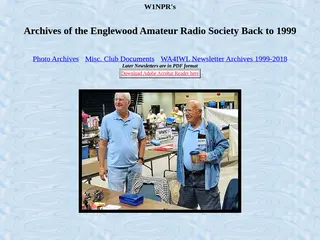
A historical archive of the Englewood Amateur Radio Society, preserving records and activities from 1999 to 2017. The site serves as a digital repository for this local ham radio club's legacy, offering a rare glimpse into nearly two decades of amateur radio community organizing.