
Amateur Radio
682 sites
http://dxing.info/introduction.dx
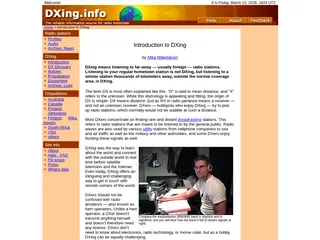
DXing.info, created by Mika Mäkeläinen, is a comprehensive guide to the hobby of DXing, the practice of listening to distant and foreign radio stations far outside their normal coverage areas. The site covers equipment, propagation, a DX glossary, expedition logs from countries like Australia, Finland, and South Africa, and audio samples of rare distant broadcasts.
https://qsl.net/tchc
The Twin City Ham Club is an amateur radio club based in West Monroe, Louisiana, serving local ham radio operators under the callsign group TCHC. This redirect page points visitors to the club's new domain and highlights their involvement in the Louisiana QSO Party contest.
https://hamfest.org/
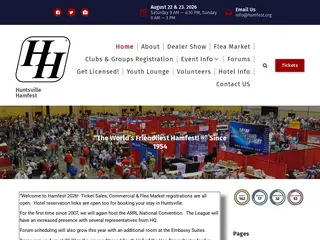
The Huntsville Hamfest is one of the longest-running amateur radio events in the United States, held annually since 1954 at the Von Braun Center in Huntsville, Alabama. In 2026 it will host the ARRL National Convention, featuring a dealer show, flea market, forums, licensing opportunities, and activities for the whole family.
https://gars.org.gg/
The Guernsey Amateur Radio Society (GARS) is a ham radio club based in the Channel Islands, meeting Friday evenings in a genuine World War II bunker at Beau Sejour Leisure Centre. The site offers a GU callbook, repeater information, QSL card bureau details, and membership resources for both local hams and visiting operators.
http://vdazone.org/hamlinks.html
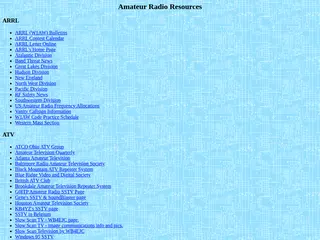
Compiled by the Northern Berkshire Amateur Radio Club (NoBARC), this extensive link directory covers virtually every corner of amateur radio, from ARRL resources and antenna plans to ATV, SSTV, antique radios, and weather satellite imagery. With over 1,300 curated links organized into dozens of categories, it serves as a comprehensive jumping-off point for ham radio operators of all interests.
https://k3lr.com/
K3LR is the homepage of Tim Duffy's world-class amateur radio contest station, featuring a multi-operator, multi-transmitter setup that has been featured in QST, RadCom, and the Spectrum Monitor. The site showcases Team K3LR's competition activities, sponsored equipment from Icom and DX Engineering, and links to Dayton Contest University events.
http://warac.org/
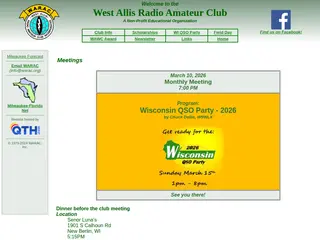
The West Allis Radio Amateur Club (W9FK) is a Wisconsin-based ham radio organization that sponsors the Wisconsin QSO Party and the David Knaus Memorial Scholarship. Visitors can find club news, event information, and resources for amateur radio enthusiasts in the greater Milwaukee area.
http://k3pgp.org/
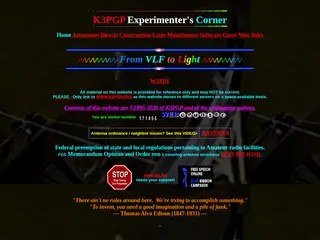
K3PGP's Experimenter's Corner is a wide-ranging amateur radio and electronics hobbyist site covering everything from VLF to light, including moonbounce (EME), lasers, antenna construction, and weak signal work. Run by the operator K3PGP, the site spans decades of experimentation and also touches on astronomy, bicycle construction, and software.
http://johncath.force9.co.uk/radio%20projects.htm
John Cath's radio project pages feature detailed amateur radio construction projects including a 17-page guide to building a 600W 50MHz solid state amplifier and a power splitter for 70cm. The site reproduces designs from RadCom magazine and the Radio Society of Great Britain, making it a useful reference for ham radio builders and experimenters.
https://www.qsl.net/races
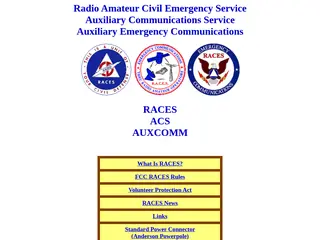
The national web presence for the Radio Amateur Civil Emergency Service (RACES), a program coordinating licensed amateur radio operators for emergency and disaster communications across the United States. Maintained by Ken Bourne (W6HK) since 1997, the site covers FCC RACES rules, news, volunteer protection information, and links to local RACES groups nationwide.