
Astronomy & Space
396 sites
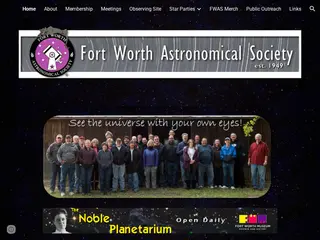
https://fortworthastro.com/
The Fort Worth Astronomical Society (FWAS) has been bringing amateur astronomy to North Texas since 1949, making it one of the oldest and largest such clubs in the country with over 200 active members. Visitors can find information on membership, club meetings, dark sky observing sites, star parties, and public outreach events conducted for local schools and organizations.
https://gb.nrao.edu/~rmaddale/Education/OrionTourCenter/index.htm
Created by Ronald J. Maddalena of the National Radio Astronomy Observatory, this interactive tour guides visitors through the Orion constellation using five images captured at different wavelengths including optical, infrared, and radio. Visitors can explore astronomical objects in Orion, learn the mythology behind the hunter, take a glossary-supported test, and see how the same region of sky looks dramatically different depending on the telescope used.
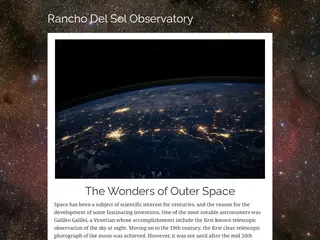
https://rdelsol.com/
Rancho Del Sol Observatory is a personal astronomy site featuring articles and updates about space exploration, including NASA's Mars rover Perseverance and planetary science topics like Uranus. The site blends historical context about astronomy's milestones with news-style posts covering recent developments in space exploration.
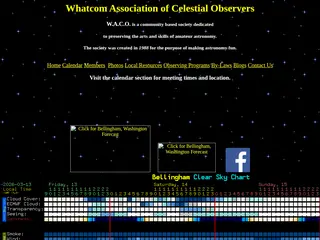
https://whatcomastronomy.org/
The Whatcom Association of Celestial Observers (W.A.C.O.) is a community astronomy club founded in 1988 in Bellingham, Washington, dedicated to making amateur astronomy accessible and enjoyable. The site offers a calendar of meetings, member resources, observing programs, photos, and local astronomy links for the Pacific Northwest region.
http://calendarzone.com/
The Calendar Zone, created by Janice McLean, is a comprehensive categorized directory of calendar-related links covering art, celestial, cultural, religious, historical, and reform topics. With over 7 million visitors since 1999, it serves as a one-stop hub for anyone curious about calendar systems, moon phases, lunar cycles, and the history of timekeeping across cultures.
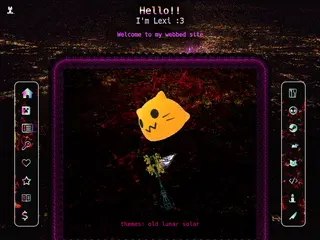
https://softkittypa.ws/
Lexi's personal homepage blends astrophotography, programming projects, and game corruption experiments into a vibrant, technically impressive old-web-style showcase. Visitors can browse her astrophotography gallery, explore open-source tools she built, and see wild ROM corruption screenshots from titles like Mario Kart Wii and Celeste.
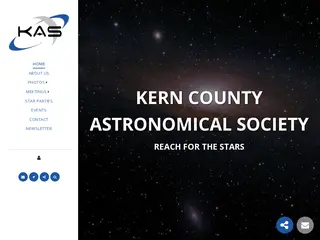
https://kernastro.org/
The Kern County Astronomical Society (KCAS) is a Bakersfield, California astronomy club founded in 1956 with a mission to foster interest in astronomy among members and the general public. The site offers information on star parties, meetings, membership, and a photo gallery featuring events like the Dark Skies Festival and visits to Mount Wilson Observatory.
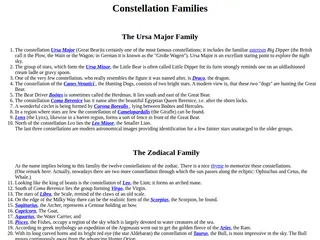
http://maps.seds.org/Const/const_family.html
Hosted on the SEDS (Students for the Exploration and Development of Space) server, this reference page catalogs the traditional constellation families of the night sky, grouping constellations like the Ursa Major family, the Zodiac, and the La Caille southern sky instruments. Each constellation entry links to deeper information, making it a useful guide for amateur stargazers learning to navigate the celestial sphere.
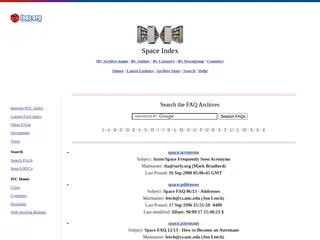
http://faqs.org/faqs/space
The faqs.org Space Index is a comprehensive archive of Usenet FAQs dedicated to astronomy and space topics, covering everything from acronyms and data sources to how to become an astronaut and controversial space questions. Maintained across dozens of indexed documents, it serves as a structured reference hub for space enthusiasts and researchers seeking archived FAQ documents from the early internet era.
https://smas.us/
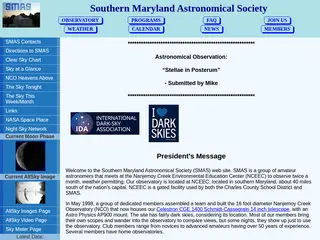
The Southern Maryland Astronomical Society (SMAS) is an amateur astronomy club that meets twice monthly at the Nanjemoy Creek Observatory in southern Maryland, home to a Celestron CGE 1400 Schmidt-Cassegrain 14-inch telescope. Members range from beginners to seasoned observers with decades of experience, and the club welcomes donations and new members to support its nonprofit mission.