
Astronomy & Space
396 sites
http://astrophysical.org/
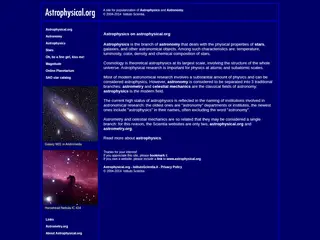
Astrophysical.org is a scientific popularization site run by Istituto Scientia, covering astrophysics and astronomy with sections on stars, magnitude, an online planetarium, and the SAO star catalog. Visitors can explore topics from stellar spectral classification to cosmology, with links to companion site Astrometry.org for celestial mechanics content.
http://spaceshipone.airshowjournal.com/2004
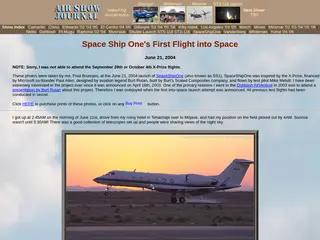
Fred Bruenjes documents his firsthand experience photographing the historic June 21, 2004 launch of SpaceShipOne, the first privately funded spacecraft to reach space, at Mojave Airport. The site is part of a larger airshow journal covering dozens of air shows across California and beyond, featuring hundreds of original photos from events ranging from Miramar to Oshkosh.

http://company7.com/
Company Seven is a long-established astro-optics retailer and resource hub based in Laurel, Maryland, serving both amateur and professional astronomers with telescopes, binoculars, rare optical instruments, and expert consultation. Notable for its involvement with NASA missions including the Hubble Space Telescope Repair and the James Webb Space Telescope, this site blends a brick-and-mortar showroom presence with a deep online resource for the astronomy community.
https://astrosystems.biz/
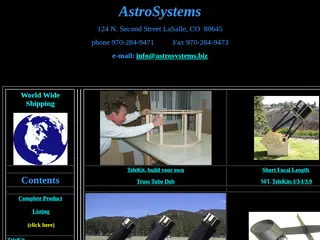
AstroSystems is a Colorado-based manufacturer selling telescope kits, accessories, and components including their signature TeleKit truss tube Dobsonians, secondary mirrors, laser collimators, and digital setting circles. With worldwide shipping and a broad catalog spanning fast f/ratio optics to dew removal systems, this site is a go-to resource for amateur telescope makers and Dobsonian enthusiasts.
https://minnesotasky.tripod.com/
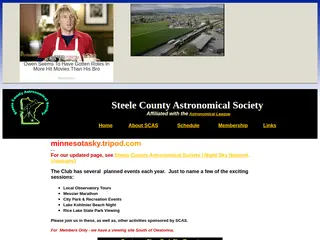
The Steele County Astronomical Society (SCAS) is an Owatonna, Minnesota-based astronomy club affiliated with the Astronomical League, organizing events like Messier Marathons, park viewing nights, and observatory tours. The site lists the club's annual schedule, membership information, and links to the Owatonna Clear Dark Sky Report for planning observation sessions.
http://nefariousplots.com/figures/4
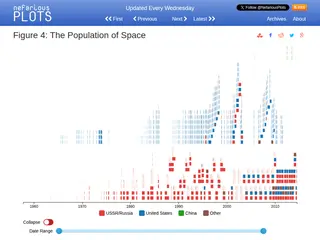
An interactive data visualization called 'The Population of Space' charts every human spaceflight from Yuri Gagarin in 1961 through 2014, grouping missions by launch vehicle and coloring them by historical era. Created in honor of the 45th anniversary of Apollo 11, it offers a fascinating way to explore how long humans have spent in space, which nations sent them, and how the shift from Soviet stations to the International Space Station shaped our continuous presence off-world.
https://eaae-astronomy.org/blog
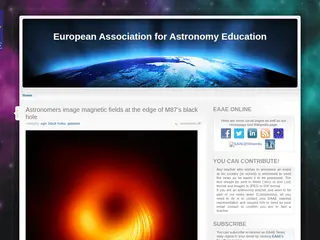
The European Association for Astronomy Education (EAAE) maintains this blog to share the latest astronomical discoveries and news, covering topics like black holes, supernovae, and planetary science. It also promotes educational initiatives such as the annual 'Catch a Star' contest, which encourages young students across Europe to engage with astronomy research.
https://projectrho.com/starmap.html
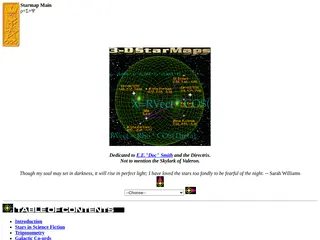
Winchell Chung (aka Nyrath the nearly wise) maintains this ambitious 3-D starmap project dedicated to the golden age of science fiction and real astronomical data. Inspired by E.E. 'Doc' Smith's classic space operas, the site blends scientific accuracy with a deep love of the stars to create interactive three-dimensional maps of nearby stellar neighborhoods.
https://asliclub.org/
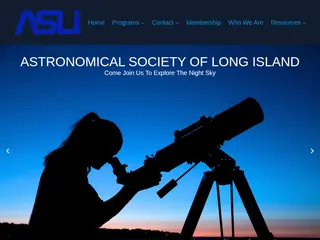
The Astronomical Society of Long Island (ASLI) is an amateur astronomy club that holds weekly meetings at the Vanderbilt Planetarium in Centerport, NY, with Zoom broadcasts available for remote attendees. Visitors can join observing sessions, get telescope advice, and explore the night sky alongside dedicated hobbyist astronomers without needing to own any equipment.
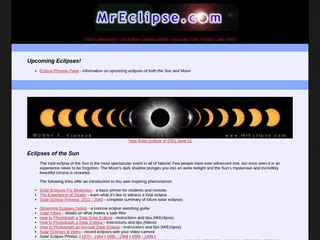
https://mreclipse.com/
Fred Espenak, known as MrEclipse, is a renowned NASA astrophysicist who has dedicated this site to comprehensive solar and lunar eclipse resources, including photography guides, safety tips, and extensive photo galleries spanning from 1970 to the present. Visitors will find detailed previews of upcoming eclipses through 2040, firsthand accounts of totality, and stunning images captured across decades of eclipse-chasing expeditions.