
Astronomy & Space
396 sites
http://casswww.ucsd.edu/archive/public/tutorial/History.html
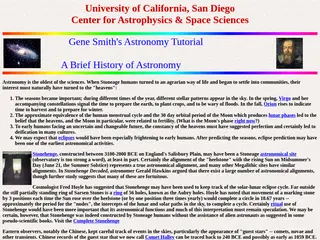
Gene Smith of UC San Diego's Center for Astrophysics and Space Sciences presents a detailed tutorial on the history of astronomy, tracing human observation of the skies from Stonehenge and ancient agrarian cultures through Pythagoras, Aristotle, Aristarchus, Copernicus, Kepler, and Galileo. Rich with links to related topics like archaeoastronomy, eclipse prediction, and the Music of the Spheres, this page is part of a broader astronomy education series hosted by UCSD.
http://atlasoftheuniverse.com/
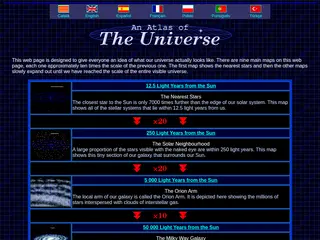
Created by Richard Powell, this stunning educational site presents nine nested maps of the universe, each roughly ten times the scale of the previous, zooming out from the nearest stars to the entire visible universe 14 billion light years away. Multilingual and richly illustrated, it offers a rare sense of cosmic scale that makes abstract astronomical distances genuinely comprehensible.
http://meteorlab.com/
New England Meteoritical Services (meteorlab.com) is a long-running resource dedicated to everything about meteorites, including identification, appraisal, and high-resolution structural imagery through a companion site covering primary and secondary meteorite structures. The organization has been online since 1994 and served as examiner and appraiser of the historic Huss-Nininger Collection of Meteorites and Tektites, making it a notable reference for both collectors and researchers.
http://astro.vaporia.com/start/transientastronomy.html
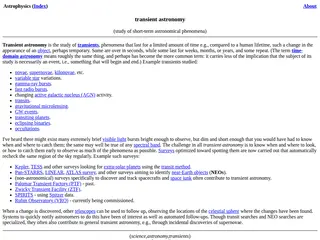
A detailed reference page from the astro.vaporia.com astrophysics index, covering transient astronomy and the study of short-lived astronomical phenomena such as supernovae, gamma-ray bursts, fast radio bursts, and gravitational wave events. It catalogs major sky surveys like ZTF, Pan-STARRS, and the Rubin Observatory, making it a useful entry point for anyone exploring time-domain astronomy.
http://atm-workshop.com/
John D. Upton's comprehensive resource for amateur telescope makers (ATMs) covers tips, techniques, and projects spanning optics grinding, metalworking, woodworking, electronics, and astrophotography. Built over two decades of hands-on experience, the site documents the rewarding crossover hobby of crafting your own telescopes and specialized astronomy accessories from scratch.
https://astropublishing.com/
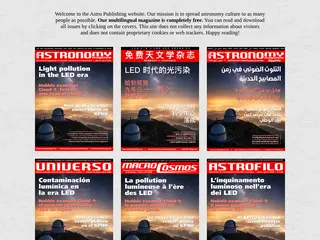
Astro Publishing offers a free multilingual astronomy magazine available to read and download in full, with a mission to bring astronomy culture to the widest possible audience. All issues can be accessed directly from the site, which is notable for its strict no-tracking, no-cookie privacy policy.
https://solarviews.com/cap/index
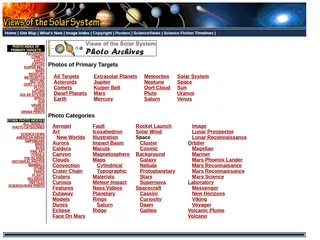
Created by Calvin J. Hamilton, Views of the Solar System is an expansive photo gallery cataloging images of every planet, moon, asteroid, comet, and deep-space phenomenon in our solar system and beyond. With hundreds of categorized photos organized by target and feature type, including spacecraft missions like Cassini, Voyager, and Curiosity, it serves as a rich visual reference for space enthusiasts and students alike.
http://backbayastro.org/
The Back Bay Amateur Astronomers (BBAA) is a non-profit astronomy club serving the Hampton Roads, Virginia area, dedicated to public outreach and bringing stargazing to the community since 1978. The site offers event calendars, observing programs, a photo gallery, telescope donation info, scholarships, and archives of newsletters and eclipse coverage.
http://xjubier.free.fr/en/site_pages/solar_eclipses/TSE_1970_GoogleMapFull.html
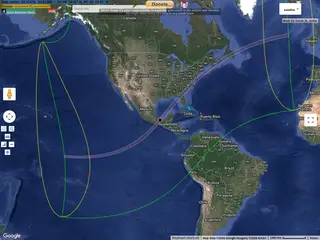
Xavier Jubier's interactive Google Map traces the path of the March 7, 1970 total solar eclipse across the USA and Mexico, offering a precise geographic visualization of the event's totality corridor. Part of a larger solar eclipse resource site, this page combines historical astronomical data with modern mapping tools to help enthusiasts and researchers explore eclipse paths.
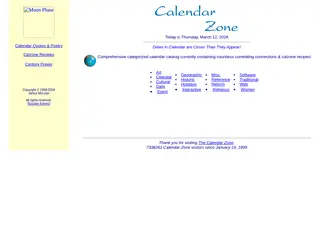
http://calendarzone.com/
The Calendar Zone, created by Janice McLean, is a comprehensive categorized directory of calendar-related links covering art, celestial, cultural, religious, historical, and reform topics. With over 7 million visitors since 1999, it serves as a one-stop hub for anyone curious about calendar systems, moon phases, lunar cycles, and the history of timekeeping across cultures.