
Biology
79 sites
https://osedax.bearblog.dev/
Grim is an ecology postgrad whose blog covers dirt, death, decay, and the weird wonders of the biological world, from freshwater antibiotic contamination to crustacean ophthalmology. Alongside the science you'll find book reviews, horror movie musings, philosophy, ethology, and hardcore music commentary, making this a refreshingly eclectic corner of the web.
https://sephonicus.neocities.org/
Sephonicus has built a personal homepage dominated by science-themed imagery, with repeated 'SCIENCE!!!' alt texts suggesting an enthusiastic celebration of scientific topics. The site is sparse in text but leans heavily into a science identity through its visuals and branding.
http://amurbirding.blogspot.com/
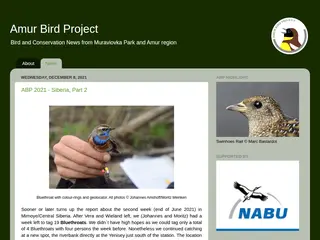
The Amur Bird Project documents bird research and conservation efforts in Russia's Amur region and Siberia, with detailed field reports on catching, tagging, and tracking species like Bluethroats with geolocators. Run by a team of researchers including Wieland Heim and collaborators, it offers a rare window into ornithological fieldwork in some of the world's most remote wetland habitats.
http://peteralfreybirdingnotebook.blogspot.com/
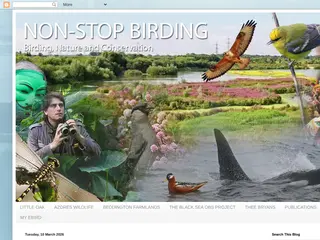
Peter Alfrey's birding notebook chronicles his passionate pursuit of birds across the UK and beyond, with detailed field accounts of species sightings, migration events, and twitches at sites like Beddington Farmlands and the Azores. The blog spans years of dated posts and connects to related projects including an eBird profile, a Black Sea observatory project, and pelagic birding trips.
https://physics.weber.edu/carroll/Wonder/extinctions.htm
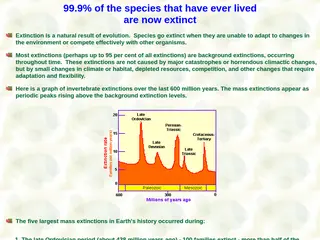
A focused educational page from Weber State University exploring the history of mass extinctions, covering all five major extinction events across 600 million years of Earth's history. Complete with graphs, fossil imagery, and detailed descriptions of each extinction's causes and casualties, it makes paleontological science accessible and visually engaging.
https://nautiloid.net/fossils/sites/mazon/mazon.html
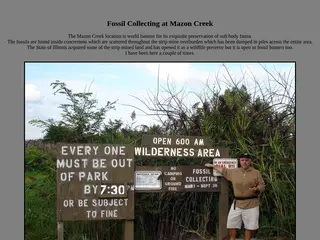
A firsthand account of fossil hunting at the Mazon Creek site in Illinois, one of the world's most celebrated locations for soft-body fauna preservation found inside concretions. The author shares photos, practical tips on finding nodules, and personal observations from multiple visits to this unique strip-mine-turned-wildlife-preserve.
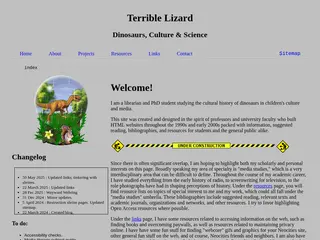
https://terriblelizard.info/
Built by a librarian and PhD student researching the cultural history of dinosaurs in children's media, Terrible Lizard blends academic bibliography, subject guides, and curated open-access resources in the spirit of old-school faculty homepages. Visitors will find ecohorror reading lists, dinosaur-related databases, language resources, and topic shrines organized with a librarian's careful hand.
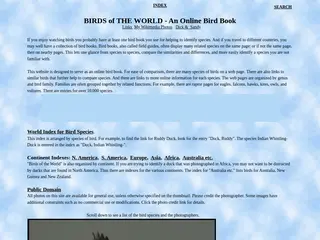
https://carolinabirds.org/
Created by Dick and Sandy Daniels, this site functions as a comprehensive online field guide covering over 10,000 bird species organized by genus and family, making it easy to compare related birds side by side. Entries span every major region of the world including North America, South America, Europe, Asia, Africa, and Australia, with links to additional information for each species.
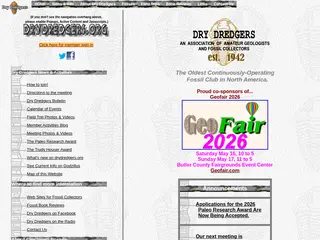
http://drydredgers.org/
The Cincinnati Dry Dredgers claim the title of the oldest continuously-operating fossil club in North America, bringing together amateur geologists and fossil collectors in the Cincinnati area since their founding. The site features extensive fossil identification guides for trilobites, crinoids, echinoderms, brachiopods, and more, plus field trip photos, member activities, and resources for finding Ordovician-era fossils in the region.
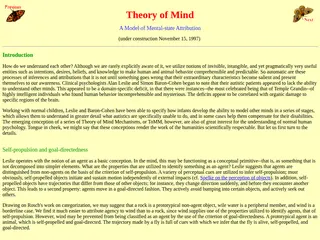
http://cogweb.ucla.edu/CogSci/ToMM.html
A scholarly resource from UCLA's CogWeb project exploring Theory of Mind (ToMM), the cognitive mechanisms humans use to attribute mental states like beliefs, desires, and intentions to others. Written by Francis F. Steen in 1997, it covers the groundbreaking work of Alan Leslie and Simon Baron-Cohen on autism, child development, and the evolutionary origins of mind-reading abilities.