
Biology
79 sites
http://norcalsetac.org/
The Northern California Regional Chapter of SETAC serves students and professionals in environmental toxicology and chemistry, offering local networking, scholarships, and annual meeting opportunities. The site archives newsletters dating back to 2008 and provides information on board members, sustaining memberships, and a student-mentor lunch program.
http://cogweb.ucla.edu/CogSci/ToMM.html
A scholarly resource from UCLA's CogWeb project exploring Theory of Mind (ToMM), the cognitive mechanisms humans use to attribute mental states like beliefs, desires, and intentions to others. Written by Francis F. Steen in 1997, it covers the groundbreaking work of Alan Leslie and Simon Baron-Cohen on autism, child development, and the evolutionary origins of mind-reading abilities.
https://berthub.eu/articles/posts/amazing-dna
Bert Hubert's long-running article explains DNA biology through the lens of a computer programmer, drawing analogies between genetic code and software concepts like error correction, compression, and the halting problem. Originally written in 2001 and revised multiple times since, it became popular enough to spawn a two-hour conference presentation and an upcoming book.
http://freidaybird.blogspot.com/
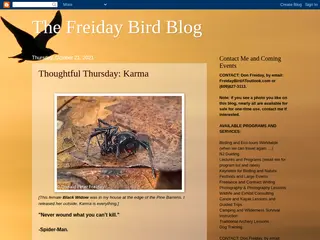
Don Freiday's nature blog blends wildlife photography, birding observations, and philosophical reflections from the Pine Barrens of New Jersey and beyond. With over 3,000 posts and a career spanning competitive birding events across Texas, Israel, and the U.S., Freiday brings genuine expertise and a naturalist's eye to every entry.
http://talkorigins.org/
The TalkOrigins Archive is a comprehensive collection of articles, essays, and FAQs dedicated to presenting mainstream scientific responses to creationism, intelligent design, and evolution denial. Drawing from the long-running talk.origins Usenet newsgroup, it covers topics ranging from evolutionary biology and geology to abiogenesis, cosmology, and the age of the Earth.
https://seabean.com/what.asp
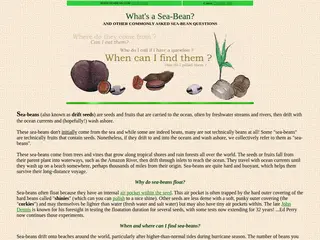
Seabean.com is a dedicated reference site exploring the fascinating world of sea-beans and drift seeds, those tropical seeds and fruits that travel ocean currents for thousands of miles before washing ashore. Visitors can learn how sea-beans float, where they originate, and how to identify specific species like Tropical Almond and Hog Plum.
https://osedax.bearblog.dev/
Grim is an ecology postgrad whose blog covers dirt, death, decay, and the weird wonders of the biological world, from freshwater antibiotic contamination to crustacean ophthalmology. Alongside the science you'll find book reviews, horror movie musings, philosophy, ethology, and hardcore music commentary, making this a refreshingly eclectic corner of the web.
https://awkwardbotany.com/
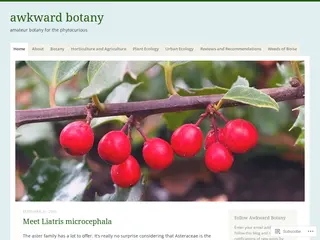
Awkward Botany is an amateur botany blog written for the "phytocurious," covering plant families, weed profiles, horticulture, urban ecology, and plant identification with genuine depth and enthusiasm. Posts like the detailed breakdown of Liatris microcephala and the Weeds of Boise series showcase careful research and a love of plant science that will delight both beginners and seasoned plant nerds.
http://oltw.blogspot.com/
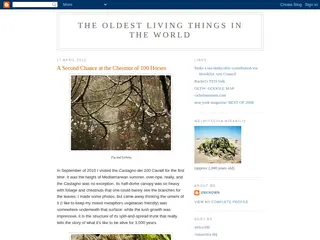
Rachel Sussman's project documenting the oldest living organisms on Earth, from ancient chestnut trees to Siberian actinobacteria, combines scientific curiosity with fine art photography. Each post chronicles her travels to find and photograph these extraordinary subjects, paired with reflections on deep time, survival, and the nature of life itself.
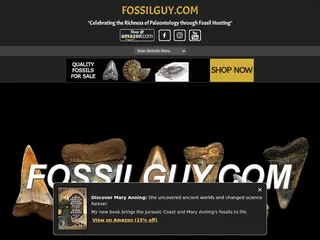
https://fossilguy.com/
Run by Jayson Kowinsky, FossilGuy.com is a comprehensive guide to fossil hunting and paleontology featuring field trip reports, fossil identification sheets, prehistoric animal profiles, and interviews with professional paleontologists. With content spanning from Megalodon teeth to trilobites to dinosaur news, it's a richly detailed resource for both amateur collectors and serious paleo enthusiasts.