
Biology
79 sites
http://ibiblio.org/virtualcell/tour/cell/cell.htm
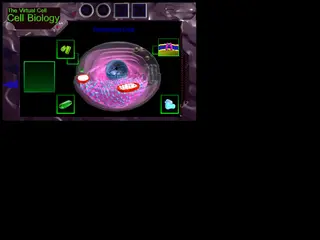
The Virtual Cell is an interactive educational tour of a biological cell, using extensive imagery to guide visitors through cellular structures and components. The included pronunciation guide and visual-heavy layout suggest this is a reference resource designed to help students and curious learners explore cell biology in an engaging, self-guided format.
https://bacteria.icu/
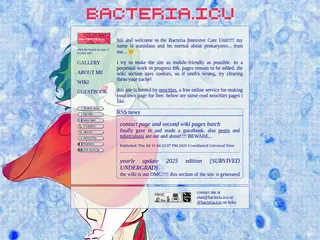
Stanislaus runs this enthusiastically nerdy site dedicated to prokaryotes and bacteria, complete with a gallery, wiki, and guestbook hosted on Neocities. The playful 'Bacteria Intensive Care Unit' theme and self-described obsession with microbiology make it a charming corner of the web for fellow microbe enthusiasts.
https://bcbirdalert.blogspot.com/
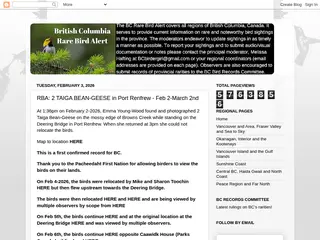
BC Rare Bird Alert is a community birding blog tracking rare and unusual bird sightings across British Columbia, Canada, with detailed location reports, maps, and observer notes. Each post documents a specific rare species encounter, making it an invaluable real-time resource for birdwatchers and ornithology enthusiasts in the Pacific Northwest.
http://habitat.org.uk/news1.htm
Wharfe Conserv@tion is a monthly review of wildlife conservation news in Britain, covering topics from GM crops and endangered butterflies to otters, wildflowers, and Scottish ecosystems. The site features a science section, conservation headlines organized across multiple pages, book reviews, and links to wildlife resources, making it a rich hub for UK nature enthusiasts.
http://alife.co.uk/essays/the_singularity_is_nonsense
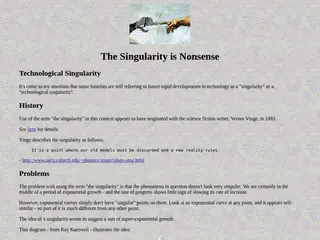
Tim Tyler's essay from the Lotus Artificial Life site takes a critical look at the concept of the 'technological singularity,' arguing that exponential growth curves have no truly singular points and that futurists like Vinge and Kurzweil misuse the term. The piece is a thoughtful, technically grounded rebuttal complete with references to Kurzweil's graphs, Wikipedia, and related essays by other thinkers.
https://beetlecraft.neocities.org/
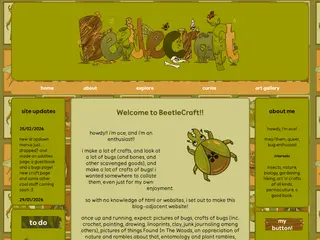
Beetlecraft is a charming personal site by Ace, a self-described bug enthusiast who shares their love of insects, nature, bone mounting, and art through a whimsical hand-crafted aesthetic. Visitors can explore a bugs page featuring finds like the Duckbilled Beetle, an art gallery, a curios section, and a blog with guides to activities like bone mounting.
http://science-workshop.com/
Science Workshop appears to be a science-oriented site, though its content is extremely minimal with only a single image visible at crawl time. The domain name suggests a focus on science education or hands-on scientific topics, but without further content the site's exact subject remains uncertain.
http://reptile-database.org/
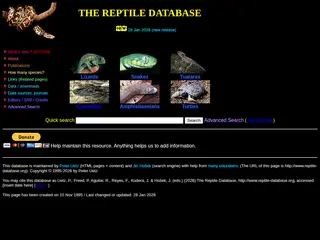
The Reptile Database, maintained by Peter Uetz and Jiří Hošek since 1995, is a comprehensive scientific reference cataloging all known reptile species including lizards, snakes, turtles, crocodiles, tuataras, and amphisbaenians. With advanced search tools, downloadable data, and regularly updated species counts backed by a team of volunteer editors, it serves as a definitive taxonomic resource for herpetologists and enthusiasts alike.
https://sephonicus.neocities.org/
Sephonicus has built a personal homepage dominated by science-themed imagery, with repeated 'SCIENCE!!!' alt texts suggesting an enthusiastic celebration of scientific topics. The site is sparse in text but leans heavily into a science identity through its visuals and branding.
https://content.lib.washington.edu/fishweb
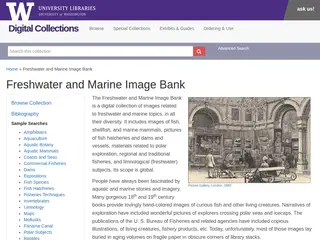
The Freshwater and Marine Image Bank is a University of Washington Libraries digital archive containing over 16,000 historic images of fish, shellfish, marine mammals, fisheries, and aquatic subjects drawn from publications spanning 1735 to 1924. Visitors can browse richly hand-colored illustrations and photographs organized into categories ranging from limnology and aquatic botany to polar exploration and traditional fisheries from around the globe.