
Encyclopedias & FAQs
109 sites
https://theswissbay.ch/pdf
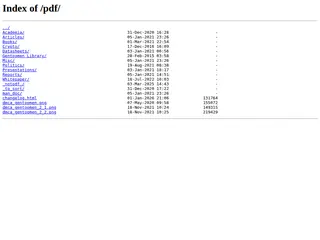
A large open directory of PDFs hosted at theswissbay.ch, offering organized collections of books, academic papers, articles, datasheets, whitepapers, and the famous Gentoomen Library. The breadth of topics covered, from cryptography and politics to technical documentation and presentations, makes it a notable archive for those seeking freely accessible reference materials.
https://relaxng.org/tutorial-20011203.html
The official RELAX NG Tutorial, authored by James Clark and MURATA Makoto and published by OASIS in December 2001, provides a comprehensive introduction to the RELAX NG XML schema language. Covering everything from basic patterns and attributes to namespaces, modularity, and comparisons with XML DTDs, this specification-grade document is an essential reference for XML developers of the era.
https://gnupg.org/gph/en/manual/x56.html
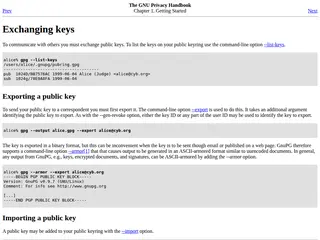
A chapter from the GNU Privacy Handbook covering the essentials of exchanging public keys using GnuPG, including exporting, importing, and validating keys via command-line tools. The guide walks through practical examples with real GPG commands, making it a valuable reference for anyone learning to use public-key cryptography with GnuPG.
http://robotstxt.org/db.html
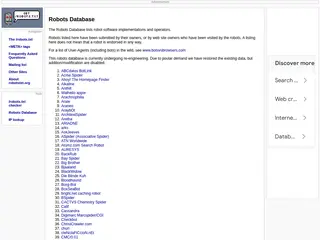
The Web Robots Pages hosts a comprehensive database of web crawler and robot software implementations, listing hundreds of bots submitted by their owners or discovered by webmasters. A reference hub for the robots.txt standard, it also offers tools like a robots.txt checker, IP lookup, and documentation on META tags for controlling web crawlers.
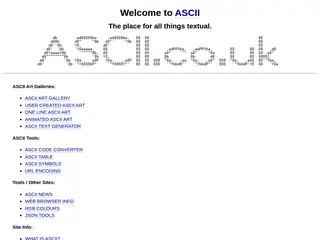
https://ascii.co.uk/
ASCII.co.uk is a comprehensive hub for everything related to ASCII, offering art galleries, an ASCII code converter, symbol tables, URL encoding tools, and a text generator. Whether you're looking to explore user-created ASCII art, generate stylized text banners, or reference character codes, this site covers the full spectrum of plain-text culture.
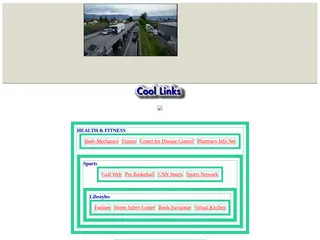
https://rlcolem.tripod.com/index-cool.html
A sprawling personal link directory by rlcolem covering dozens of categories including health, government, entertainment, news, music, and museums. Built in classic late-90s tripod style, it curates hundreds of external links organized into neat topic sections, serving as a one-stop gateway to the early web.
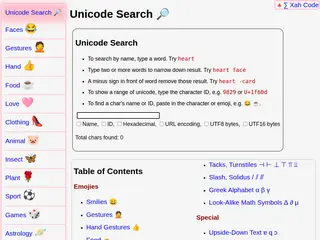
http://xahlee.info/comp/unicode_index.html
Xah Lee's Unicode Search is a comprehensive reference tool for finding Unicode characters, emojis, and symbols by name, ID, or hex code, covering everything from math symbols to ancient scripts like Cuneiform and Linear B. Visitors can browse an extensive categorized index spanning emojis, currencies, IPA characters, box art, and dozens of world writing systems, making it an invaluable bookmark for developers and writers alike.
http://nongnu.org/chmspec/latest
Edited by Paul Wise and Jed Wing, this unofficial specification documents Microsoft's HTML Help system in exhaustive technical detail, covering the CHM file format, LZX compression, XML structure, and all associated configuration options. Reverse-engineered without NDA restrictions and released under the GNU GPL, it serves as a rare open reference for developers working with or building tools around the proprietary .chm format.
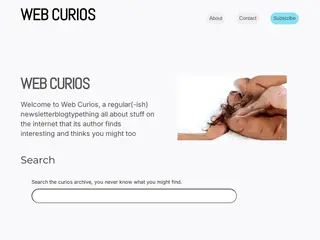
https://webcurios.co.uk/
Web Curios is a long-running newsletter-style blog curating the most interesting, strange, and compelling corners of the internet, published on a regular weekly schedule. Each edition is a sprawling, opinionated tour through web oddities, digital culture, and current events, written with a distinctly sardonic British voice.
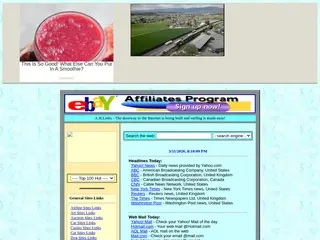
https://ahlinks.tripod.com/
A.H.Links is an early 2000s web directory billing itself as 'the doorway to the Internet,' organizing hundreds of popular sites into categorized link collections covering everything from airlines and auctions to recipes and religion. The site also features a ranked Top 100 list of the hottest websites of the era, making it a fascinating time capsule of the early web landscape.