
Encyclopedias & FAQs
109 sites
https://ericsink.com/bos/Finance_for_Geeks.html
Eric Sink, founder of developer tools company SourceGear, breaks down accounting and finance concepts specifically for software entrepreneurs and technically-minded geeks who find themselves running small ISVs without formal business training. The article covers core financial statements, funding concepts, and practical terminology to help geek founders hold their own in conversations with accountants and financial advisors.
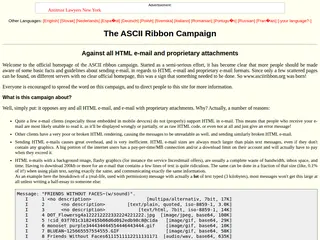
http://asciiribbon.org/
The official home of the ASCII Ribbon Campaign, an advocacy movement urging internet users to avoid HTML email and proprietary file attachments in favor of plain text. The site explains the technical and practical reasons behind the campaign, offers multilingual resources, and provides badge graphics for supporters to display on their own sites.
http://aluluei.com/electropolis.htm
Elizabeth Reid's 1991 University of Melbourne honours thesis examines Internet Relay Chat as a space for community formation and communication, offering an early academic look at online social dynamics. This pioneering text explores how IRC users construct identity, community, and moral frameworks in a digital environment, and was later adapted into publications including a chapter in an MIT Press volume.
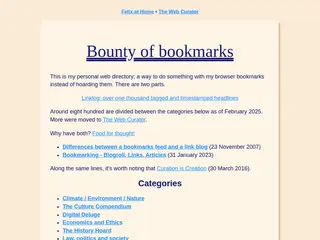
https://felix.plesoianu.ro/links/index.html
Felix's personal web directory collects over a thousand tagged and timestamped bookmarks spanning topics from climate and history to science, technology, and culture. Organized into themed categories like 'The History Hoard' and 'The Sci-Tech Stash,' it functions as a curated link library with highlighted reads on AI, meritocracy, and media criticism.
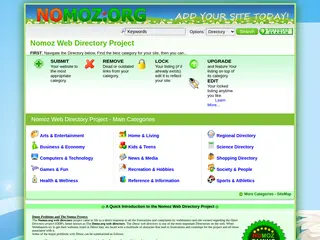
http://nomoz.org/
Nomoz is a human-edited general web directory launched as an alternative to the troubled DMOZ/Open Directory Project, allowing webmasters to submit, edit, and manage their own listings across dozens of categories. Built with direct webmaster input rather than volunteer editors, it aims to be a more transparent and SEO-friendly link directory covering everything from arts and entertainment to regional and shopping categories.
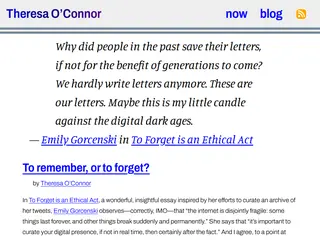
https://tess.oconnor.cx/2024/09/to-remember-or-forget
Theresa O'Connor reflects deeply on the ethics of digital curation versus preservation, exploring whether we have the right to retroactively delete or alter our past online selves. The essay weaves together personal experience as a trans person, IndieWeb philosophy, and thoughtful commentary on data archiving, ephemeral content, and digital legacy.
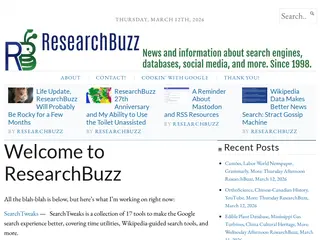
https://researchbuzz.me/
ResearchBuzz has been covering the world of search engines, databases, archives, and online information resources since 1998, making it one of the longest-running research-focused web publications around. Run by a single author known as ResearchBuzz, the site pairs news commentary with a growing suite of original tools like SearchTweaks, Local Search America, and Congress Corral that help users get more out of Google, Wikipedia, and RSS feeds.
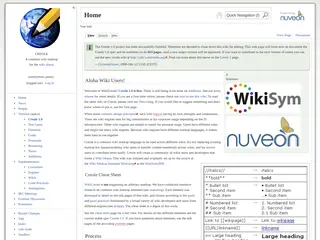
http://wikicreole.org/
WikiCreole is the documentation hub for Creole 1.0, a standardized common wiki markup language intended to bring consistency across different wiki platforms. With 613 pages covering the full specification, test cases, implementation guides, converters, and good practices, it serves as the definitive reference for developers and wiki enthusiasts looking to adopt or understand the Creole standard.
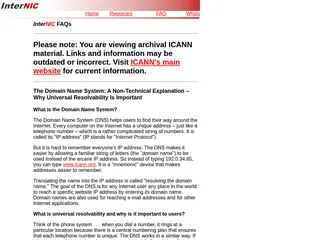
http://internic.net/faqs/authoritative-dns.html
This archived InterNIC page from ICANN provides a non-technical explanation of how the Domain Name System works, covering IP addresses, domain resolution, universal resolvability, and the importance of a single authoritative DNS root. It offers clear, accessible answers to common questions about how domain names function and why global DNS consistency matters for all Internet users.
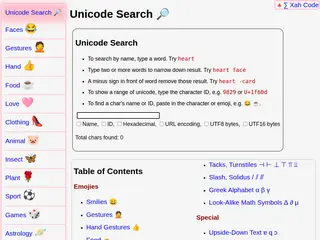
http://xahlee.info/comp/unicode_index.html
Xah Lee's Unicode Search is a comprehensive reference tool for finding Unicode characters, emojis, and symbols by name, ID, or hex code, covering everything from math symbols to ancient scripts like Cuneiform and Linear B. Visitors can browse an extensive categorized index spanning emojis, currencies, IPA characters, box art, and dozens of world writing systems, making it an invaluable bookmark for developers and writers alike.