
Encyclopedias & FAQs
109 sites
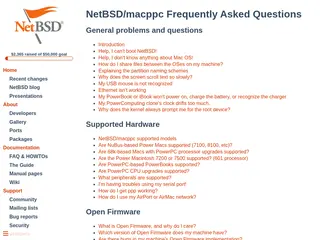
http://netbsd.org/ports/macppc/faq.html
The official NetBSD/macppc FAQ covers everything a user needs to install and run NetBSD on PowerPC-based Apple hardware, from booting and partitioning to Open Firmware, supported hardware models, and peripheral configuration. With dozens of detailed questions and answers spanning networking, ADB keyboards, USB devices, and kernel options, it serves as an indispensable technical reference for running this Unix-like OS on older Power Macs and PowerBooks.
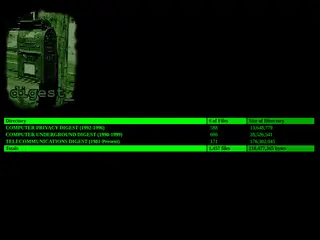
http://digest.textfiles.com/
A subdomain of the legendary Textfiles.com, this archive hosts over 1,400 digitized digest files spanning decades of early internet culture, including the Computer Privacy Digest, Computer Underground Digest, and Telecommunications Digest. Researchers and digital historians will find an invaluable primary source collection documenting hacker culture, privacy debates, and telecom policy from the 1980s through the late 1990s.
https://digital.library.upenn.edu/books
The Online Books Page, edited by John Mark Ockerbloom and hosted by the University of Pennsylvania, catalogs over 3 million freely available books on the web, searchable by author, title, subject, and serial. It features curated collections highlighting women writers, banned books, and prize winners, making it one of the most comprehensive free ebook directories on the internet.
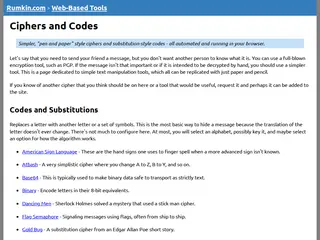
https://rumkin.com/tools/cipher
Tyler Akins' Rumkin.com hosts a comprehensive collection of browser-based cipher and code tools, covering everything from classic substitution ciphers like Caesar and Atbash to more obscure ones like Playfair and Übchi. Each tool automates the encoding and decoding process while explaining the underlying logic, making it a valuable reference for cryptography hobbyists and puzzle enthusiasts alike.
http://searchenginesoftheworld.com/
Search Engines of the World is a long-running directory cataloging internet search engines organized by geographic region, covering Africa, America, Asia, Australasia, Europe, and global resources. Dating back to 1996, it serves as a reference for finding region-specific search tools from around the globe.
https://tilde.club/~miccaman/delicious
A massive archive of 10,561 bookmarks saved by tilde.club user miccaman via the Delicious bookmark service between 2005 and 2014, preserved here after Delicious shut down. The collection spans web design, programming, art, and internet culture, with a built-in linkrot analysis showing which URLs have gone dead over the years.
https://wiki.archiveteam.org/index.php?title=GeoCities_Project
The Archive Team wiki page documenting the GeoCities Project, a coordinated mass effort to rescue and preserve data from Yahoo's GeoCities before its shutdown in October 2009. It covers the technical details of the crawl, the volunteers involved, and the parallel efforts with archive.org, making it a valuable historical record of one of the web's most significant preservation projects.
http://robotstxt.org/
Robotstxt.org is the definitive reference for understanding web robots, crawlers, and spiders, covering everything from how to write a robots.txt file to blocking unwanted bots from your site. It includes a robots database, a robots.txt syntax checker, an IP lookup tool, and a comprehensive FAQ making it an essential stop for webmasters and developers.
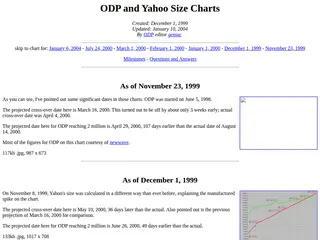
http://geniac.net/odp
Created by ODP editor geniac, this page tracks and compares the growth of the Open Directory Project (DMOZ) and Yahoo Directory through detailed size charts and milestone tables spanning 1998 to 2004. It's a fascinating historical snapshot of the early web directory wars, complete with projected vs. actual crossover dates and a Q&A section explaining the methodology behind the size calculations.
http://outer-outer.space/visual-history-of-delicious-bookmarks
A richly researched visual history of Delicious, the pioneering social bookmarking site, tracing its design evolution through dozens of archived screenshots spanning over a decade. The creator reflects on digital ephemerality, the cultural impact of tagging and metadata, and what was lost when Delicious faded, making this a thoughtful and well-documented tribute to a formative piece of web history.