
Encyclopedias & FAQs
109 sites
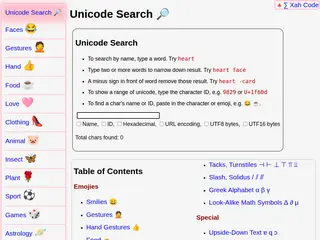
http://xahlee.info/comp/unicode_index.html
Xah Lee's Unicode Search is a comprehensive reference tool for finding Unicode characters, emojis, and symbols by name, ID, or hex code, covering everything from math symbols to ancient scripts like Cuneiform and Linear B. Visitors can browse an extensive categorized index spanning emojis, currencies, IPA characters, box art, and dozens of world writing systems, making it an invaluable bookmark for developers and writers alike.
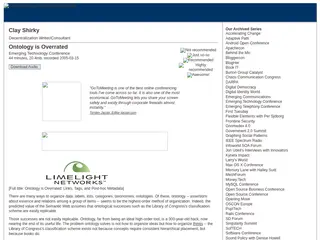
http://web.archive.org/web/20130729231420id_/http://itc.conversationsnetwork.org/shows/detail470.html
This page from the Conversations Network hosts a recorded talk by Clay Shirky titled 'Ontology is Overrated,' captured at the O'Reilly Emerging Technology Conference in 2005. Shirky, a noted writer and consultant on decentralization and social software, delivers a 44-minute audio presentation exploring why rigid classification systems are being challenged by the social web.
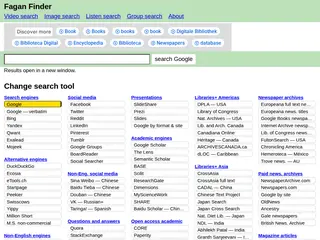
https://faganfinder.com/
Fagan Finder is a comprehensive meta-search portal that aggregates hundreds of search engines, databases, encyclopedias, and specialty search tools into a single organized interface. Visitors can search across mainstream engines like Google and Bing, non-English regional engines, social media platforms, Q&A sites, image and video search tools, and much more, making it an invaluable reference hub for serious researchers.
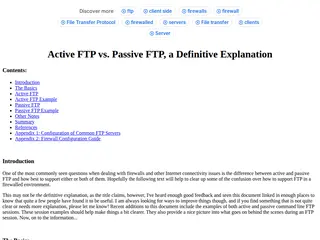
http://slacksite.com/other/ftp.html
A thorough technical reference explaining the difference between active and passive FTP modes, complete with command-line session examples and firewall configuration guidance. Widely linked and praised in networking communities, it covers the underlying port mechanics, firewall compatibility issues, and configuration for common FTP servers.
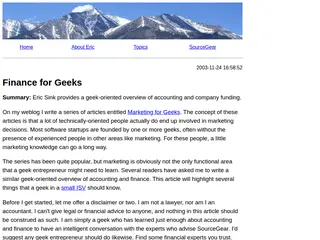
https://ericsink.com/bos/Finance_for_Geeks.html
Eric Sink, founder of developer tools company SourceGear, breaks down accounting and finance concepts specifically for software entrepreneurs and technically-minded geeks who find themselves running small ISVs without formal business training. The article covers core financial statements, funding concepts, and practical terminology to help geek founders hold their own in conversations with accountants and financial advisors.
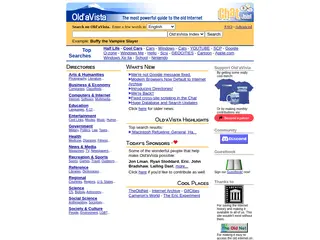
http://oldavista.com/
Old'aVista is a nostalgic search engine built specifically for finding old websites from classic hosting services like Geocities, Angelfire, Tripod, and AOL, complete with a retro AltaVista-inspired interface. It indexes a massive database of vintage web content and offers curated directories, top searches, and links to preservation resources like the Internet Archive.
https://relaxng.org/tutorial-20011203.html
The official RELAX NG Tutorial, authored by James Clark and MURATA Makoto and published by OASIS in December 2001, provides a comprehensive introduction to the RELAX NG XML schema language. Covering everything from basic patterns and attributes to namespaces, modularity, and comparisons with XML DTDs, this specification-grade document is an essential reference for XML developers of the era.
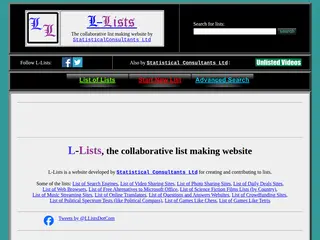
http://l-lists.com/en
L-Lists is a collaborative list-making platform developed by Statistical Consultants Ltd, where registered users can create, contribute to, and browse curated lists covering everything from search engines to science fiction films. The site functions as a crowd-sourced reference hub, offering a structured directory of lists on technology, games, media, and more.
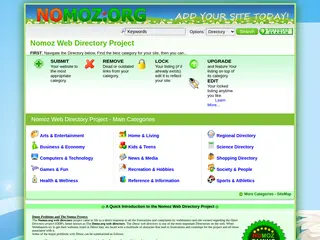
http://nomoz.org/
Nomoz is a human-edited general web directory launched as an alternative to the troubled DMOZ/Open Directory Project, allowing webmasters to submit, edit, and manage their own listings across dozens of categories. Built with direct webmaster input rather than volunteer editors, it aims to be a more transparent and SEO-friendly link directory covering everything from arts and entertainment to regional and shopping categories.
https://members.tripod.com/voodoo_chicken_bones/links.html
A quirky personal links page from a Tripod-era site called 'Voodoo Chicken Bones,' collecting favorite websites with irreverent commentary on topics ranging from America's Most Wanted and Harry Turtledove novels to ninja humor and alien cow abductions. The writing is tongue-in-cheek throughout, with goofy asides about Britney Spears, Farrah Fawcett, and fictional rich people rankings, giving the whole page a distinctly early-2000s comedic personality.