
Hardware
65 sites
https://beyond3d.com/resources
Beyond3D is a technical deep-dive site covering GPU architecture, graphics hardware analysis, and 3D chip history, with detailed reviews of cards from NVIDIA, ATI/AMD, and others. Its comprehensive 3D Chips index cataloguing nearly every major consumer graphics processor ever released makes it an invaluable reference for graphics hardware enthusiasts and engineers alike.

https://eggfreckles.net/
Thomas Brand's Egg Freckles is a focused notes-style blog covering Apple hardware, software, and accessories with entries on MacBook Air, iPads, M2 displays, music ripping, and retro Mac topics. The site is a tidy, minimal log of Apple-centric observations and reviews that appeals to Mac enthusiasts and Apple history buffs alike.
https://realworldtech.com/remarking
Real World Tech is a long-running tech analysis site covering CPUs, GPUs, semiconductors, and processor market dynamics, with this particular article from 1997 exposing grey market practices in the AMD K6-200 processor retail space. Written by Dean Kent, it offers a vendor's perspective on remarked chips and pricing deception, making it a fascinating historical snapshot of the early retail CPU market.
https://jasonfarrell.com/misc/deadpixeltest.php
A no-frills browser-based tool by Jason Farrell that helps users detect stuck or dead pixels on LCD monitors by cycling through solid black, white, red, green, and blue fullscreen backgrounds. Simple keyboard shortcuts make it easy to navigate between test colors without leaving fullscreen mode.
http://plasma-online.de/index.html
PLASMA online is a hardware identification and reference guide that lets users look up computer components by chip, picture, manufacturer, serial number, or FCC ID. The site covers CPUs, chipsets, graphics cards, audio, networking hardware, and more, with overclocking tweaks and upgrade advice rounding out the resource.

https://wesg.ca/
Wesg.ca is the personal tech site of a Canadian developer named Wes, showcasing Arduino and Raspberry Pi projects including a 3D printed boat robot, a coffee notification system, and custom PCB builds. The site also lists several small business ventures in logistics and home services, giving it a distinctive mix of maker culture and entrepreneurship.
http://benchtest.com/celeron.html
Benchtest.com is Jim's enthusiast resource dedicated to overclocking Intel Celeron processors, with a heavy focus on CPU cooling solutions including heat sinks, water coolers, heat pipes, and temperature monitoring tools. The site features hands-on project writeups, benchmark tests, and detailed reviews of cooling hardware for the legendary Celeron 300A and related chips.
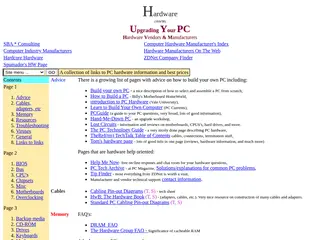
https://darkwing.uoregon.edu/%7Ewharmon/hardware.html
Part of the PC Friendly Internet Page, this extensive link directory covers virtually every aspect of PC hardware including CPUs, motherboards, BIOS specs, overclocking, memory, and peripherals. Compiled around 1998, it organizes hundreds of vendor links, price search engines, troubleshooting guides, and manufacturer indexes across three content pages.
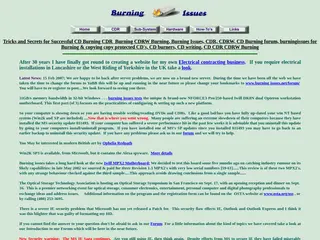
http://burningissues.net/
Burningissues.net is a comprehensive resource covering CD, CDR, CDRW, and DVD burning tips, tricks, hardware reviews, and software guides for getting the most out of optical disc burning. The site features how-to guides, forum discussions, motherboard and hardware tests, and practical troubleshooting advice for common burning problems on Windows systems.
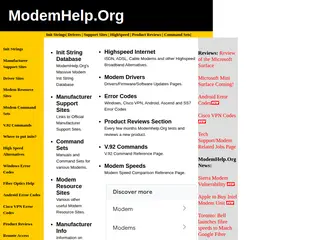
http://modemhelp.org/
ModemHelp.Org is a comprehensive reference site covering modem troubleshooting, initialization strings, drivers, and command sets for a wide range of modem manufacturers. Visitors can access a massive init string database, error code references for Windows, Cisco VPN, and Android, plus product reviews and guides on high-speed broadband alternatives like ISDN, ADSL, and cable modems.