
Philosophy
121 sites
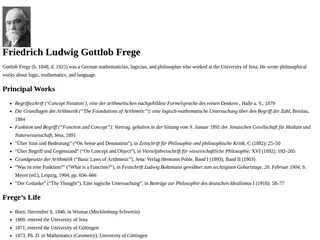
https://mally.stanford.edu/frege.html
Hosted on Stanford's servers and authored by Edward N. Zalta, this reference page documents the life, principal works, and secondary literature of the influential German philosopher and logician Gottlob Frege (1848-1925). It serves as a concise scholarly gateway to Frege's foundational contributions to logic, mathematics, and the philosophy of language, with links to related Stanford Encyclopedia of Philosophy entries.
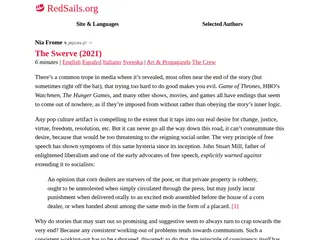
https://redsails.org/the-swerve
Red Sails hosts politically engaged essays examining how mainstream media and pop culture suppress radical ideas, with 'The Swerve' by Nia Frome analyzing how stories like Game of Thrones and The Hunger Games systematically undercut their own revolutionary logic. The site publishes multilingual leftist theory and criticism, drawing connections between liberal philosophy, free speech doctrine, and the limits of pop culture radicalism.
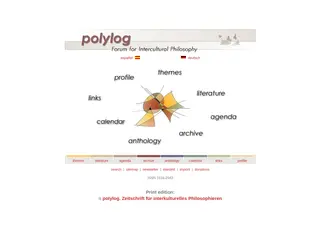
https://polylog.org/
Polylog is an international academic journal dedicated to intercultural philosophy, fostering dialogue across cultural traditions on topics including comparative philosophy, interreligious questions, and multiculturalism. Published in multiple languages including Spanish and German, it features thematic essays, an anthology, archive, and a calendar of philosophical events.
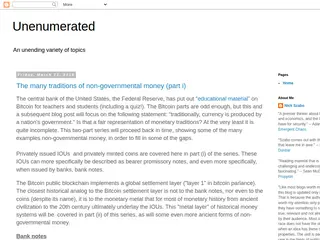
http://unenumerated.blogspot.com/
Unenumerated is Nick Szabo's long-running intellectual blog covering an unusually wide range of topics including monetary history, cryptography, law, and the origins of Bitcoin. Posts like the multi-part series on non-governmental money reveal deep historical research and original thinking that has influenced cryptocurrency discourse for years.

https://bdsweb.tripod.com/ru/index.htm
BDSвеб is a comprehensive Russian-language resource dedicated to the Dutch rationalist philosopher Baruch Spinoza, offering full texts of his major works in Latin, Russian, English, German, and French. The site includes translations of the Ethics, Tractatus Politicus, and other writings, alongside encyclopedic articles, research on Spinoza's philosophical system, a bibliography, and links to Spinoza societies.

https://trans4mind.com/
Trans4mind, created by Peter Shepherd in 1997, is a vast personal development resource hub featuring over 25,000 blog articles, online books, podcasts, courses, and quote collections focused on holistic growth and wellbeing. Spanning topics from emotional intelligence and relationships to esoteric philosophy and creativity, it centers on the idea that transforming one's mind is the key to a fulfilling life.
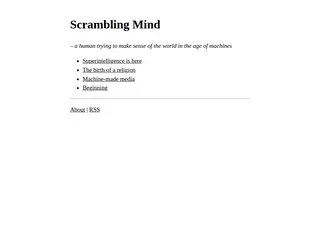
https://scramblingmind.com/
Scrambling Mind is a thoughtful blog exploring the implications of artificial intelligence, superintelligence, and machine-made media through an introspective human lens. Posts tackle big-picture questions about technology and society, including the philosophical dimensions of AI's rise and its cultural consequences.
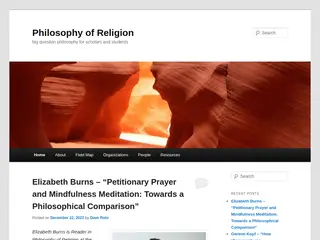
https://philosophyofreligion.org/
A scholarly hub dedicated to the philosophy of religion, featuring reviews of key texts, profiles of philosophers, journal links, and an ongoing series where invited philosophers reflect on the nature and purpose of their field. Run by Dave Rohr, the site serves both academics and students with resources spanning events, positions, and comparative philosophy of religion.
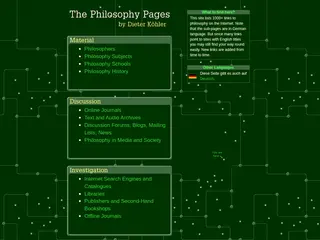
https://philo.de/Philosophy-Pages
Created by Dieter Köhler, this German-language directory catalogs over 1000 links to philosophy resources on the internet, covering philosophers, schools of thought, history, online journals, university departments, and research institutes. Despite the German interface, the breadth of categories and the sheer volume of curated links make it a comprehensive gateway to academic and popular philosophy online.
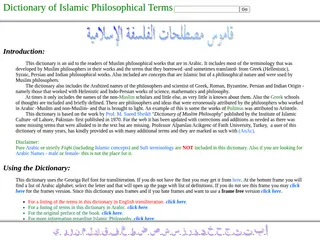
http://muslimphilosophy.com/pd
A comprehensive dictionary of Islamic philosophical terms compiled by Muhammad Hozien, covering the terminology developed by Muslim philosophers in Arabic as well as concepts borrowed and translated from Greek philosophical works. Organized by Arabic alphabet, it includes Arabized names of Greek, Roman, and Byzantine scholars and corrects historical misattributions, making it an invaluable reference for readers of classical Muslim philosophical texts.