
Programming
535 sites
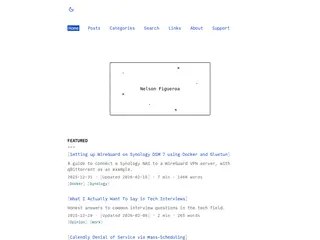
https://nelson.cloud/
Nelson Figueroa's technical blog covers a range of developer-focused topics including Go programming, Docker, cybersecurity exploits, and macOS tooling. Posts blend practical tutorials with candid opinion pieces about tech workplace culture, making it both a useful reference and an honest read.
https://holly.mlem.systems/
Holly's personal corner of the internet features a minimalist homepage linking to her blog, code forges, and social profiles across the fediverse and Bluesky. The site hints at a tech-oriented personality with references to Lisp, multiple git repositories, and a fondness for foxes.
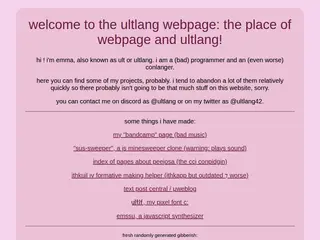
https://ultlang.github.io/
Emma, known online as ultlang, shares a collection of small creative programming projects including a JavaScript minesweeper clone, a pixel font, a JavaScript synthesizer, and a constructed language called Peejosa. The site has a charmingly self-deprecating tone and also links to a micro-blog and an Ithkuil helper tool, making it a fun snapshot of a hobbyist coder-linguist's experiments.
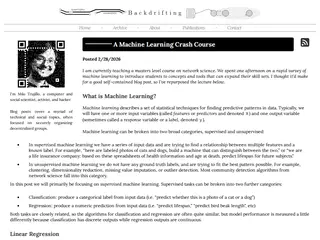
https://backdrifting.net/
Milo Trujillo's personal blog sits at the crossroads of computer science, social systems, and hacking, with deep technical posts covering machine learning, network science, and decentralized organizing. The site reflects the work of a researcher and activist who writes with academic rigor but for a general hacker audience, and is even accessible via a Tor hidden service.
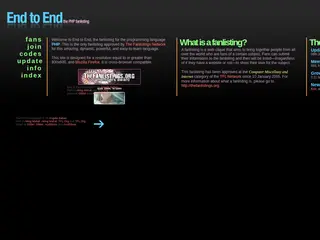
http://php.aking-mahal.net/
End to End is the official TFL-approved fanlisting for the PHP programming language, created by Angela Sabas and boasting 883 members from 60 countries. It serves as a gathering place for PHP enthusiasts worldwide, offering membership listing, fan codes, and affiliate links to related programming fanlistings.
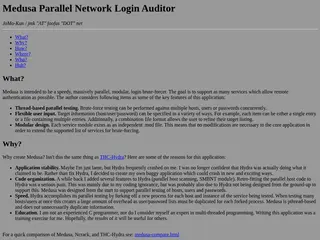
http://foofus.net/goons/jmk/medusa/medusa.html
The official homepage for Medusa, a speedy, massively parallel, modular network login brute-forcing tool created by JoMo-Kun of Foofus Networking Services. It documents supported protocols including FTP, HTTP, MySQL, RDP, and dozens more, with download links, usage instructions, and a comparison to the similar tool THC-Hydra.
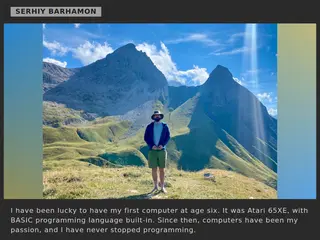
https://barhamon.com/
Serhiy Barhamon is a lifelong programmer whose personal site blends software engineering notes, book reviews, and adventurous travel logs including a 1000km bicycle ride from Geneva to Barcelona with a broken rib. The site covers a wide range of interests but centers on software development, with sections on domain-driven design, running LLMs locally, and reflections on startup life.

https://foxar.top/
CyberFoxar's personal corner of the web belongs to a self-described tech enthusiast and queer furry who geeks out over DnD, tabletop RPGs, VR, and gaming. The site includes social links across many platforms, webring memberships, and miscellaneous notes on topics like lube-making and a card game rules project.
https://gingershaped.computer/
Ginger's personal site showcases her software projects, tools, and curiosities with a minimalist index-style layout. A developer who writes software for fun and profit, she participates in webrings like 'no ai' and 'c10y', hinting at a community-minded indie web presence.
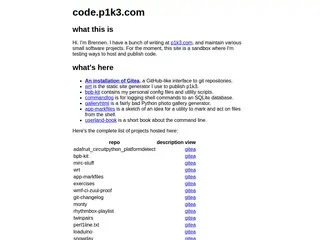
https://code.p1k3.com/
Brennen's personal code hosting sandbox uses Gitea to showcase dozens of small software projects, from a static site generator to shell utilities and Python tools. Standout projects include 'userland-book', a short book about the command line, and a variety of handy scripts for file management, logging, and Raspberry Pi work.