
Retro Computing
195 sites
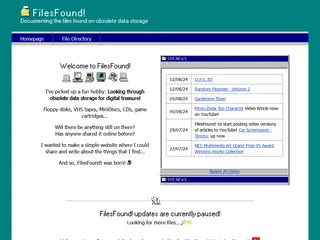
https://filesfound.net/
FilesFound! is a digital archaeology project by PIXELATEDCROWN, dedicated to excavating and documenting the contents of obsolete storage media like floppy disks, VHS tapes, MiniDiscs, and game cartridges. Each article highlights a unique discovery, from vintage screensavers to award-winning CD-ROM art collections, preserving digital artifacts that might otherwise be lost forever.
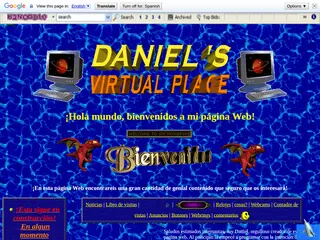
https://displayman.neocities.org/
Daniel's Spanish-language personal page started as a hub for old computers and curious internet links, evolving into a lively collection of GIFs, webcams, webrings, and assorted oddities. The site carries a strong old-web aesthetic with retro construction banners, button collections, and membership in multiple webrings including the Retronaut webring.
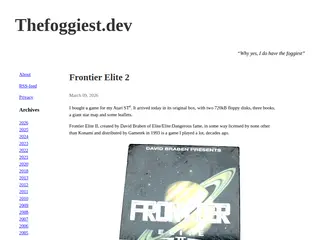
https://thefoggiest.dev/
Thefoggiest.dev is a long-running personal blog stretching back to 2005, where the author dives deep into retro computing topics like Atari ST games, MSX hardware, and classic software alongside Linux, self-hosting, and IndieWeb participation. Posts combine nostalgic enthusiasm with technical detail, making it a rich read for anyone who grew up with 8-bit and 16-bit machines.
https://purplehello98.neocities.org/
PurpleHello98 is an old-web style personal site participating in multiple retro-themed webrings including the Retronaut Webring and the Hotline Webring. The site leans into vintage internet aesthetics and community, with a strong anti-AI stance signaled by its circuit board imagery.

http://lost-theory.org/ocrat/chargif/char/c1e9.html
A reference page from the 'ocrat' project displaying character glyph c1e9, likely part of a larger archive of character encoding or font bitmap data from legacy computing systems. The site appears to document extended ASCII or Unicode characters rendered as GIF images, making it a niche but useful resource for retro computing and character set research.

https://spiritone.com/~nabil/hickok
Aaron Nabil's page preserves scanned and OCR'd manuals for the rare Hickok/Western Electric KS-15874-L2 Cardmatic Tube Tester, including complete operating instructions, schematics, circuit theory, and calibration guides. A niche but invaluable reference for vintage electronics enthusiasts hunting down hard-to-find documentation for these semi-automatic vacuum tube testing machines.
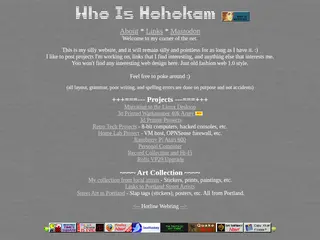
https://whoishohokam.com/
Hohokam's personal site is a self-described 'high-tech mid-life crisis' packed with hands-on projects spanning retro 8-bit computers, hacked consoles, 3D printing, home lab networking, and Raspberry Pi tinkering. Alongside the tech projects, the site features record collecting, hi-fi audio upgrades, and a curated collection of Portland street art, making it a genuinely eclectic Web 1.0-style corner of the internet.
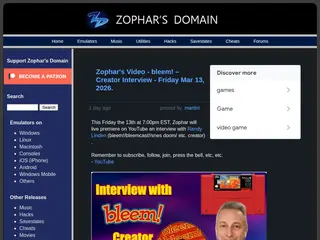
https://zophar.net/
Zophar's Domain is one of the oldest and most comprehensive emulation resource sites on the web, offering downloads for emulators across dozens of classic platforms including NES, SNES, N64, Sega, and Commodore 64. Visitors can also find video game music files (NSF, PSF, SPC formats), ROM hacks, savestates, cheats, translations, and technical documents, making it an essential stop for retro gaming and emulation enthusiasts.
https://teeeeeega.blog/
Teeeeeega's blog is a minimalist diary covering retro tech, digital minimalism, productivity, and scattered personal thoughts. Powered by Bear and accompanied by a newsletter, it offers early access to ideas the author explores in both written posts and YouTube travel videos.
https://jwz.org/
Jamie Zawinski, co-founder of Netscape and Mozilla.org and primary developer of Lucid Emacs, maintains this personal hub linking to his blog, DNA Lounge nightclub, hacks, and other projects. A piece of internet history from one of the most influential figures in early open-source and browser development.