
Science Fiction & Fantasy
138 sites

http://planetmag.com/
Planet Magazine is an online publication dedicated to science fiction and fantasy, serving readers who want curated SF and fantasy content in a magazine format. Its focused subject matter and dedicated genre coverage make it a notable destination for fans of speculative fiction.
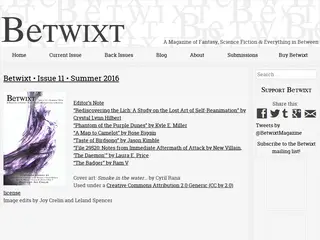
http://betwixtmagazine.com/
Betwixt is an independent literary magazine dedicated to publishing original short fiction in the fantasy, science fiction, and speculative genres, with issues featuring multiple authors per installment. Issue 11 showcases stories ranging from lich mythology to Arthurian legend, offering a curated reading experience for fans of imaginative short fiction.
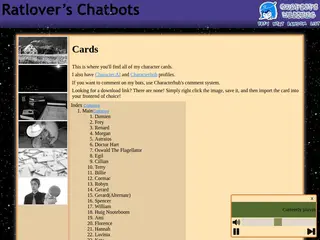
https://ratlover.neocities.org/cards
Ratlover's site is a comprehensive collection of AI character cards for chatbot frontends, featuring dozens of original characters alongside figures from video games like Final Fantasy, Skyrim, and Morrowind, as well as Space Station 13 personas. Visitors can browse and download card images to import into their preferred AI chat software, with characters ranging from original OCs to adventure scenarios and themed submissions.
https://file770.com/
File 770 is Mike Glyer's long-running news blog covering science fiction fandom, Hugo Awards, book releases, and the broader SF/F community. With posts dating back to 2004 and regular 'Pixel Scroll' roundups packed with genre news and commentary, it's an essential hub for anyone deeply invested in the science fiction world.

http://chpr.at/sfstory.html
Created and maintained by Christian Pree since 1998, this is a comprehensive bibliography of German-language science fiction and fantasy stories and books, organized by author, translator, and year of publication. With tens of thousands of entries spanning countless authors and decades of publishing history, it stands as a remarkable reference work for German SF collectors and enthusiasts.
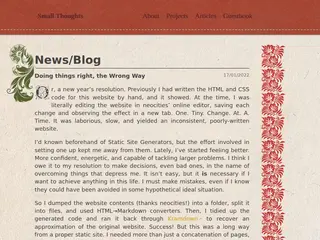
https://smolthots.neocities.org/
Small Thoughts is a deep-dive personal research site dedicated to the 'ESD' (Extreme Size Difference) creative fiction niche, covering rigorous worldbuilding topics like biomechanics of scaling, alien size theory, borrower-style architecture, and custom cultures for giant and tiny characters. The creator publishes meticulously researched articles on biology, material science, and speculative fiction writing craft, making it a genuinely unusual and thoughtful resource for size-fantasy worldbuilders.
http://jophan.org/mimosa
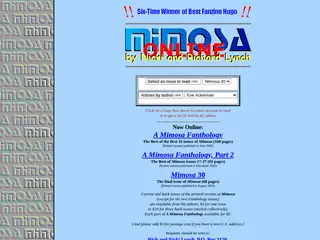
Mimosa is the web home of Mimosa fanzine, a six-time Hugo Award-winning publication by Rich and Nicki Lynch dedicated to science fiction fan history and community. With 30 issues archived and contributions from luminaries like Forrest J Ackerman, Greg Benford, and Dave Langford, it is an invaluable record of SF fandom's past.
https://spacejetters.co.uk/
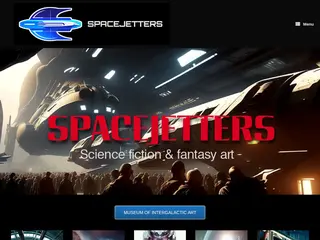
Spacejetters is an elaborate sci-fi worldbuilding site presenting an in-universe 'Museum of Intergalactic Art' with 18 themed galleries spanning galactic conflicts, Federation worlds, robotics, and interstellar tourism. The site creates an immersive fictional universe complete with named planets, species, political factions, and lore, making it a uniquely creative science fiction art and world-building project.
https://fiawol.org.uk//fanstuff/biblio/index.htm
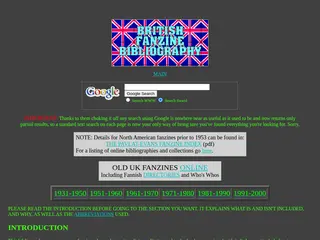
Rob Hansen's exhaustive bibliography catalogs British science fiction fanzines from 1931 to 2000, organized by decade with searchable listings and detailed publication records. A remarkable reference work for fans of SF fandom history, it covers printed, hectographed, and other amateur publications while linking to digitized copies of old UK fanzines available online.
http://sfrt.com/
SFRT has been serving the science fiction, fantasy, and horror communities online since 1986, making it one of the longest-running genre communities on the internet. Writers, readers, and fans gather here to discuss, review, and connect around novels, films, and all things speculative fiction.