
Software
301 sites
https://tinytools.directory/
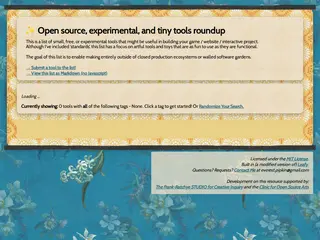
Maintained by Everest Pipkin, this curated directory collects small, free, open source, and experimental digital tools aimed at creative and artistic making outside of closed software ecosystems. Visitors can browse and filter hundreds of tools by tag, making it a treasure trove for game makers, interactive artists, and web creators seeking joyful, artful alternatives to mainstream production software.

https://houl.wtf/
Houl Floof is the personal homepage of Houl, a self-described 'cat software running on dog hardware' with a presence across Fediverse, Bluesky, Matrix, and Codeberg. The page is a minimal link hub connecting visitors to their various social and technical accounts, featuring a Minecraft skin render and participation in the Fediring webring.
https://permacomputing.net/
The Permacomputing wiki explores a community-driven concept centered on resilience, regenerativity, and sustainability in computing, drawing inspiration from permaculture philosophy. Visitors will find principles, technical assessments, project listings, and a library of texts examining the environmental and societal costs of modern computational culture from an anti-capitalist, ecological perspective.
https://paintsquiggles.helioho.st/
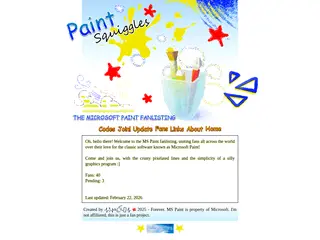
Paint Squiggles is a fanlisting dedicated to Microsoft Paint, the beloved classic graphics program that has delighted users with its simplicity and pixelated charm for decades. With 40 members and counting, it brings together fans worldwide who share a nostalgic appreciation for the humble but iconic software.
https://creamsan.neocities.org/
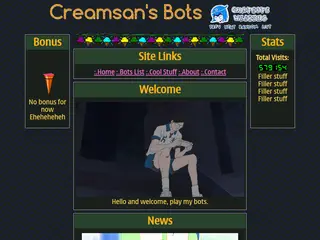
Creamsan's personal page serves as a hub for their AI chatbot creations, featuring a bots list with recommendations for running them on GPT-4 and Claude models. The site is part of a Chatbots Webring and links out to Characterhub and Rentry, suggesting an active presence in the AI character and roleplay bot community.
https://taonaw.com/
JTR's personal microblog covers a wide mix of daily life, tech tinkering, and niche software interests including Emacs, org-mode, TiddlyWiki, and Linux, with side interests in coffee, gaming, and photography. The site is hosted on Micro.blog and offers a warm, conversational stream of short posts that feels like peeking into the life of a thoughtful, curious tech enthusiast.
http://internettrafficreport.com/
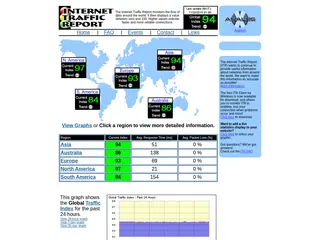
The Internet Traffic Report monitors real-time data flow across major internet routes worldwide, displaying performance indices, response times, and packet loss for regions including Asia, Europe, North America, and more. Visitors can view historical graphs spanning 24 hours, 7 days, or 30 days, and even embed live statistics widgets on their own websites.

https://spiritone.com/~jlorentz/email
A profile page for Richard J. Lorentz, a Computer Science professor at California State University Northridge who specializes in game-playing algorithms and Monte Carlo tree search. He is notable for co-creating the Amazons program Invader, the Havannah program Wanderer, and the Dots and Boxes program Matadors.
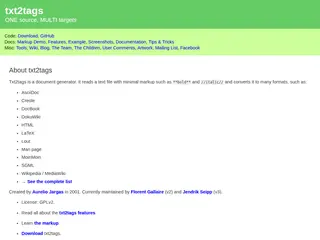
https://txt2tags.org/
txt2tags is an open-source document converter created by Aurelio Jargas in 2001 that transforms plain text files with minimal markup into dozens of formats including HTML, LaTeX, DocBook, DokuWiki, and Wikipedia markup. The project site offers full documentation, markup demos, feature lists, downloads, and links to the GitHub repository for both the v2 and v3 maintained versions.

https://mac.elated.com/2008/07/27/how-to-get-dashboard-widgets-on-your-desktop
Reality Distortion is a Mac-focused blog covering day-to-day tips, tricks, news, and how-to guides for Mac OS X and Apple products. This particular post walks readers through enabling Dashboard widgets on the desktop using developer mode or third-party tools, with clear terminal commands and practical examples.