
Weather & Climate
104 sites
https://www.benholcomb.com/storm-chasing/links
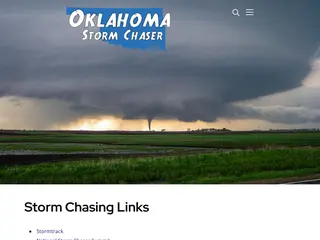
Ben Holcomb's storm chasing hub is a sprawling personal site featuring tornado videos, pictures, past chase logs, statistics, and equipment guides built over nearly two decades of active chasing. This links page alone connects to hundreds of fellow storm chasers and meteorological resources, making it a valuable hub for the storm chasing community.
https://www2.mmm.ucar.edu/imagearchive
Hosted by UCAR's Mesoscale and Microscale Meteorology Laboratory, this archive provides a collection of meteorological case study images for researchers and forecasters. The Case Selection Kit Image Archive serves as a reference tool for selecting and studying atmospheric weather cases, making it a useful resource for those in the meteorological sciences.
https://storms2observe.com/
Bill Gargan has documented his storm chasing adventures year by year from 1991 through 2025, creating a detailed personal archive of decades on the road pursuing severe weather. The site offers a rare long-term firsthand account of the storm chasing hobby, with annual chase logs and links to fellow chasers in the community.
https://perezmedia.net/ceruleanarc/storm-chase-sum.html
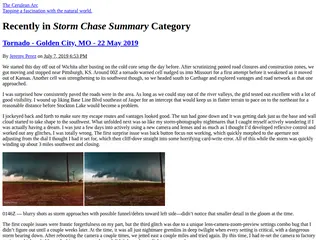
Jeremy Perez's Cerulean Arc is a detailed storm chasing blog featuring firsthand summaries of tornado intercepts and severe weather events across the American Southwest and Great Plains, stretching back to 2009. Each entry combines narrative field accounts with meteorological analysis, road network strategy, and storm photography, making it a compelling read for weather enthusiasts and chasers alike.
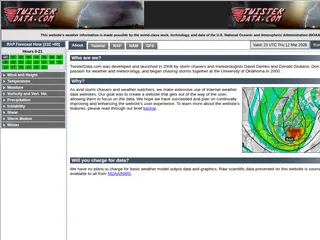
http://twisterdata.com/
TwisterData.com is a meteorological data tool built in 2008 by storm chasers David Demko and Donald Giuliano, offering RAP, NAM, and GFS weather model forecasts with detailed atmospheric parameters like CAPE, hodographs, helicity, and sounding data. Designed with a clean, data-first philosophy, it pulls from NOAA datasets and is especially valuable for storm chasers, meteorologists, and serious weather enthusiasts who need raw model output without distractions.
http://severeweathervideo.com/
Scott McPartland is a veteran storm chaser whose site showcases his tornado, hurricane, and supercell footage captured across Oklahoma, Texas, Kansas, and beyond. Visitors can browse and purchase professionally produced DVDs documenting events like the 2011 tornado outbreak and Hurricane Katrina, with footage that has aired on The Weather Channel, Discovery Channel, and CNN.
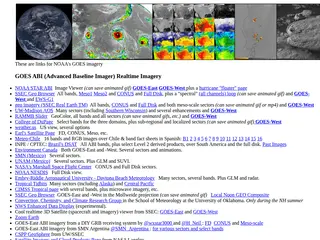
http://cimss.ssec.wisc.edu/goes/goesdata.html?fbclid=IwAR1tJwdbaRkZL3OS55qttm0KXOx16pK2Mw2uGiGqFSr_WDBDL4FuR8l7eEE
Maintained by Tim Schmit at CIMSS/SSEC (University of Wisconsin-Madison), this comprehensive link directory aggregates GOES satellite imagery sources from NOAA, NASA, and international agencies including Brazil, Mexico, Chile, and Canada. Visitors can access real-time ABI imagery across all bands, mesoscale sectors, full-disk views, and animated GIFs from dozens of platforms covering both GOES-East and GOES-West.
https://meteor.iastate.edu/~jdduda/chasing/chasing.html
Jeff Duda's storm chasing log spans a decade of tornado pursuits across the Great Plains and Midwest, with lifetime stats including 71 tornadoes witnessed across 111 total chases and over 52,000 miles driven. Each year links to detailed chase accounts, making it a compelling personal record of one dedicated chaser's adventures in severe weather.
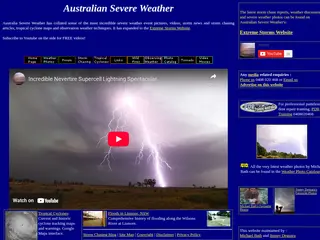
http://australiasevereweather.com/
Maintained by storm chasers Michael Bath and Jimmy Deguara, Australia Severe Weather is a comprehensive archive of severe weather photography, storm chasing reports, tornado and waterspout pictures, and tropical cyclone tracking maps covering Australian weather events. With over 35,000 photographs, timelapse webcam videos, flood history records, and storm chasing news, it serves as a serious reference for anyone fascinated by extreme Australian weather.
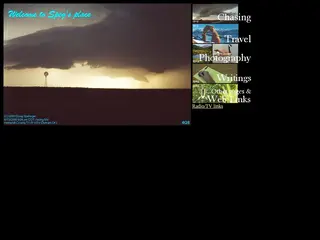
https://spegweb.com/
Speg's personal site covers storm chasing, tornado information, travel, and photography, making it a classic old-web hobbyist destination with a clear passion for severe weather. Navigation sections hint at radio and TV links alongside personal writings, giving the site a broad but weather-focused appeal.