
Web Design
1378 sites
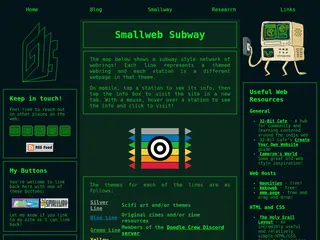
https://gusbus.space/smallweb-subway
Smallweb Subway is a creative project by Gus Bus that visualizes a network of webrings as an interactive subway map, where each colored line represents a themed community of indie websites covering topics like sci-fi art, zines, comics, and poetry. Visitors can "ride" the subway by clicking through member sites, making web discovery feel like navigating a transit system.
https://coeurl.neocities.org/site
Coeurl is Ashton's personal Neocities space featuring a layout archive, link-back buttons, webrings, and web asset resources including brushes, textures, and tutorials. The site leans heavily into old-web webmaster culture, offering downloadable site graphics and a curated button wall for community linking.
https://unapothecary.neocities.org/
Alix's Neocities site is a lovingly crafted tribute to the early internet, serving as a personal hub for favorite websites, graphics, music playlists, and HTML/CSS practice. With a retro aesthetic, active webrings, and a curated links page, it embodies the spirit of the old web revival.
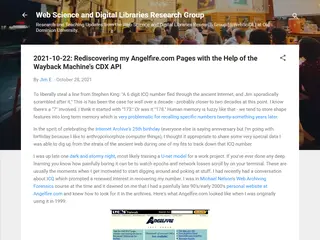
https://ws-dl.blogspot.com/2021/10/2021-10-22-rediscovering-my.html
Jim E. from the Web Science and Digital Libraries Research Group at Old Dominion University documents his quest to recover his old Angelfire.com personal pages using the Wayback Machine's CDX API. The post blends nostalgia for early web artifacts like ICQ numbers and Geocities with a genuine technical walkthrough of web archiving tools and digital preservation methods.
https://nownownow.com/
NowNowNow is a global directory of personal websites that feature a /now page, a simple concept popularized by Derek Sivers where people share what they are currently focused on in their lives. Visitors can browse thousands of entries organized by location, from California to Kosovo, or jump to a random page for a serendipitous peek into someone's current chapter.
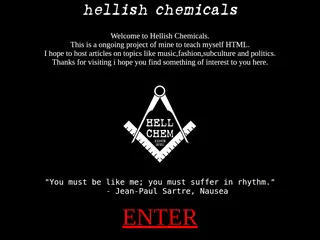
https://hellishchemicals.neocities.org/
Hellish Chemicals is a fledgling personal site by someone teaching themselves HTML, with plans to cover music, fashion, subculture, and politics. Currently a sparse landing page with a Sartre quote and an entry link, it hints at an interesting creative vision waiting to unfold.
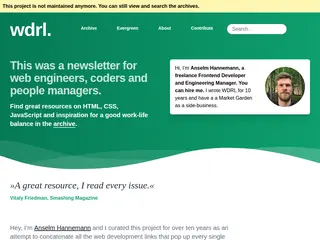
https://wdrl.info/
WDRL is a curated web development newsletter archive created by freelance frontend developer Anselm Hannemann, running for over 10 years and 300+ editions sent to 18,000 subscribers. The archive compiles handpicked links and resources covering HTML, CSS, JavaScript, SVG, and engineering management, praised by industry figures at Google, Smashing Magazine, and beyond.
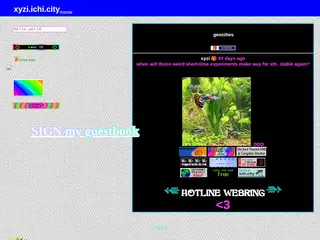
https://xyzi.ichi.city/
A minimalist old-web personal page by xyzi on ichi.city, styled with nostalgic references to MySpace, GeoCities, and ASCII art. Visitors will find a guestbook, a Hotline webring, and a retro early-internet aesthetic packed into a sparse but charming landing page.
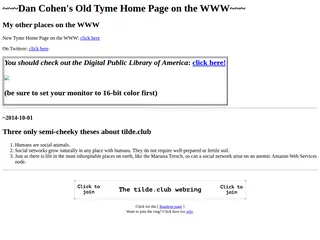
https://tilde.club/~dancohen
Dan Cohen's tilde.club homepage mixes nostalgic old-web charm with a brief but thoughtful reflection on social networks, community, and human connection in the digital age. The page features three semi-serious theses about tilde.club's emergence as a social space, plus links to Cohen's other online presence including the Digital Public Library of America.
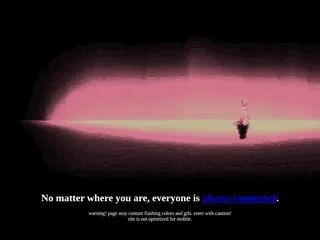
https://fawnofthewired.neocities.org/
A stylized personal landing page with an atmospheric 'always connected' theme, featuring audio and animated visuals with a retro-web aesthetic. The site warns visitors about flashing colors and gifs, suggesting a richly decorated old-web experience awaits beyond the entry point.