
Reference
78 sites
http://cogsci.uwaterloo.ca/
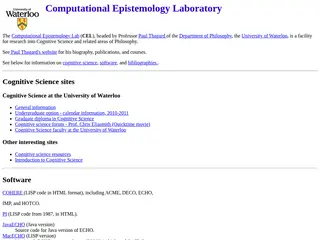
The Computational Epistemology Laboratory at the University of Waterloo, led by Professor Paul Thagard, serves as a research hub for cognitive science and philosophy of mind. Visitors can access downloadable software tools like COHERE, ECHO, and DIVA written in LISP and Java, alongside curated bibliographies and a glossary for cognitive science research.
https://kanji.sljfaq.org/
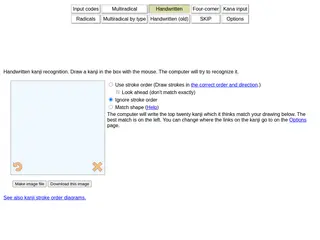
A specialized web tool by Ben Bullock that lets users draw kanji characters by hand with a mouse and have them automatically recognized, making it invaluable for looking up unfamiliar Japanese characters. The site also offers multiple lookup methods including multiradical, four-corner, and SKIP codes, with support for over a dozen interface languages.
https://guides.library.iit.edu/c.php?g=853311&p=6108547
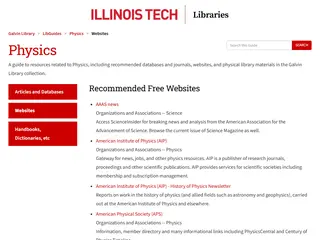
A curated library guide from Illinois Institute of Technology's Galvin Library, collecting recommended physics websites, databases, and journals for students and researchers. The guide covers major organizations like AIP, APS, CERN, and Fermilab, along with educational resources such as the Feynman Lectures, HyperPhysics, and historical archives like the Einstein Papers Project.
https://www.cyndislist.com/personal
Cyndi's List is a massive genealogy link directory maintained by Cyndi Ingle, featuring over 317,000 categorized and cross-referenced links to genealogy resources worldwide. This particular section focuses on personal research pages, organizing individual family trees, blogs, wikis, and shared ancestry publications alphabetically for easy browsing.
https://behindthename.com/
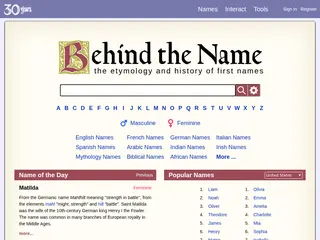
Behind the Name is a comprehensive encyclopedia of first names from around the world, covering etymology, history, and cultural origins for thousands of given names across dozens of languages and traditions. Visitors can browse by letter or origin, check name popularity by country, explore namesakes, and even use tools like a random name generator and baby name advisor.
http://hackeducation.com/
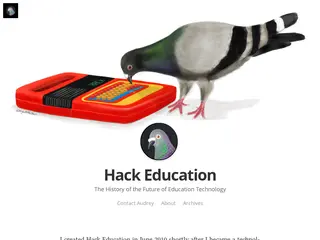
Hack Education is Audrey Watters' long-running independent publication covering the history and critical analysis of education technology, free from advertising and investor influence. With over a decade of archives, essays, and talks, it offers a sharp, skeptical perspective on ed-tech trends, behavioral psychology in learning, and the implications of technology in education.
https://littledirectoryofcalm.com/
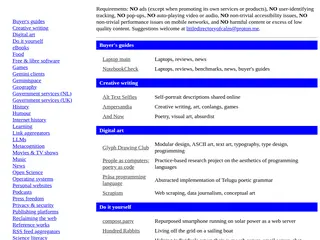
The Little Directory of Calm curates links to websites that meet strict requirements: no ads, no tracking, no pop-ups, and no auto-playing media, making it a peaceful alternative to the noisy modern web. Spanning dozens of categories from creative writing and digital art to web development and open science, it serves as a thoughtfully filtered gateway to the quieter corners of the internet.
https://math.ucla.edu/~asl
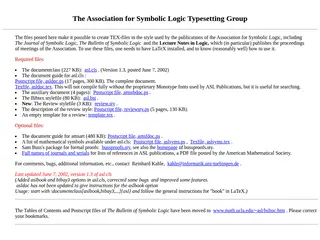
The ASL Typesetting Office provides LaTeX and TeX style files for authors submitting to publications of the Association for Symbolic Logic, including the Journal of Symbolic Logic and the Bulletin of Symbolic Logic. Maintained by Reinhard Kahle, the site offers document classes, BibTeX stylefiles, proof packages, and guides to help researchers format their work to ASL's exact typesetting standards.
https://zhongwen.com/
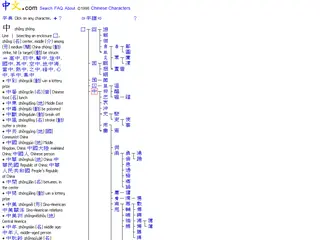
Zhongwen.com offers a comprehensive Chinese-English etymological dictionary focused on traditional Chinese characters, tracing the pictographic and historical origins of each character. Learners of Mandarin and linguistics enthusiasts alike will find it invaluable for understanding how Chinese writing evolved from ancient pictographs through sources like the Shuowen.
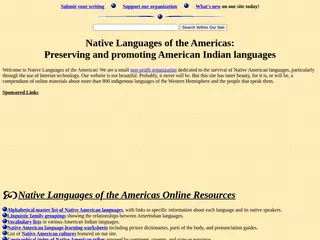
https://native-languages.org/
Native Languages of the Americas is a non-profit resource dedicated to preserving over 800 indigenous languages of the Western Hemisphere, run by Laura Redish and Orrin Lewis. Visitors can explore an alphabetical master list of Native American languages, vocabulary lists, pronunciation guides, linguistic family groupings, tribal geographic indexes, and materials tailored for younger readers.