
Society & Culture
883 sites
Subcategories:
- Genealogy & Family History (140)
- Religion & Spirituality (74)
- History (162)
- Philosophy (121)
- Paranormal & Occult (42)
- Subcultures (333)
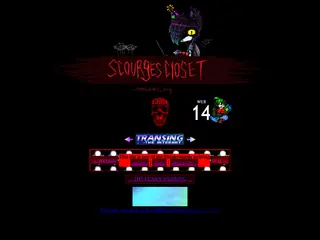
https://scourgescloset.neocities.org/
A personal page belonging to someone who participated in the selfship webring, a community centered around the hobby of self-shipping with fictional characters. The site is image-heavy and minimal in text, giving it the feel of a small personal corner of the old web.
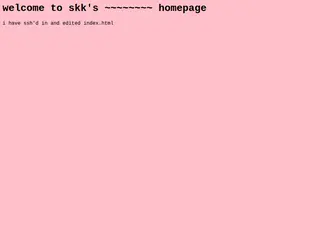
https://tilde.town/~skk
A tilde.town member page by skk, consisting of a bare-bones homepage created by directly SSH-ing in and editing the index file. Nearly empty aside from a greeting, it represents the minimalist DIY spirit of the tilde community movement.
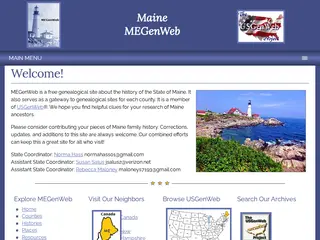
https://usgenwebsites.org/MEGenWeb
MEGenWeb is a free genealogical resource dedicated to Maine family history, serving as a gateway to county-level genealogical sites across the entire state. Part of the larger USGenWeb project, it offers histories, places, and research resources to help visitors trace their Maine ancestors.
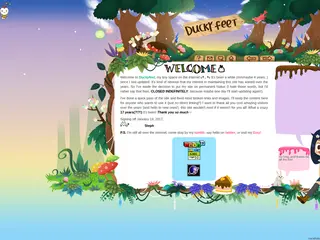
https://jellyfishforest.com/duckyfeet
Duckyfeet is Jessica's personal homepage, version 17, themed around narwhals with a playful old-web aesthetic full of graphics and a tagboard. The 'So long, and thanks for all the fish' farewell quote and narwhal theme give this compact site a charming marine-life personality.
https://cyberpunk.cl/
A minimalist cyberpunk-aesthetic personal page built around leet-speak text art, protocol references, and the visual language of underground hacker and cyberpunk culture. The site's sparse content layers internet protocol codes (SMTP, XMPP, PGP, IPFS, Tor onion) with themes of alienation, paranoia, and isolation in a style that feels like a terminal readout from a dystopian future.
https://tilde.town/~rll
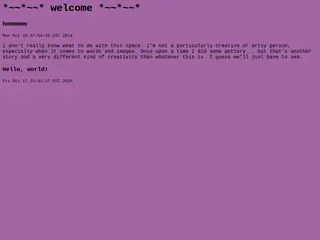
A sparse early member page on tilde.town, one of the original collaborative Unix communities that helped revive old-web culture. User rll muses briefly about creativity and pottery in a pair of timestamped journal-style entries from October 2014.
https://exnihl.neocities.org/
The Shore of Nihil is a personal Neocities site by a creator who covers fandom topics and personal life, with content intended for older audiences. The site features a retro CRT aesthetic, autoplay gifs, and is still in the process of updating its pages to a new layout.
https://thephilosopherslibrary.neocities.org/
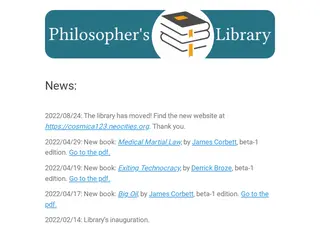
The Philosophers Library is a small digital archive hosting free PDF books focused on political and philosophical topics, featuring works by independent journalists and thinkers like James Corbett and Derrick Broze. The collection centers on critiques of technocracy, surveillance, and corporate power, making it a niche resource for readers interested in alternative political philosophy.
https://userrights.contemporary-home-computing.org/
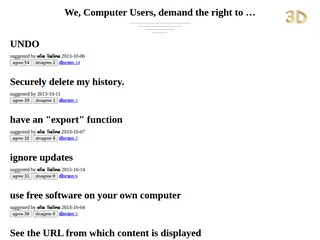
A crowd-sourced manifesto collecting user-submitted demands for digital rights, from the right to undo actions and export data to true anonymity and freedom from app store restrictions. Created by net artist Olia Lialina and programmed by Dragan Espenschied, this interactive site lets visitors vote on and discuss each demand, forming a living document of grassroots tech user advocacy.
https://brisray.com/wstory/wind.htm
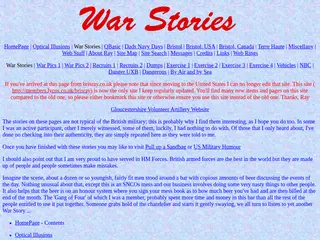
Ray shares firsthand accounts and witnessed tales from his time serving in the British Army, covering training, exercises, vehicles, NBC drills, and unexploded ordnance incidents. The collection of military anecdotes is presented with personal commentary, making it a candid and entertaining look at life in HM Forces.