
Tutorials & How-To
71 sites
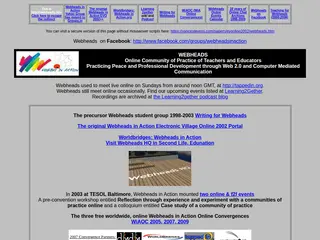
https://vancestevens.com/papers/evonline2002/webheads.htm
Webheads in Action is a long-running online community of practice for teachers and educators exploring Web 2.0, computer-mediated communication, and professional development through collaborative online learning. Created by Vance Stevens, this portal aggregates over a decade of resources including chat archives from 1998-2009, online convergence events, podcasts, and links to the group's presence across Second Life, Facebook, and various collaborative platforms.
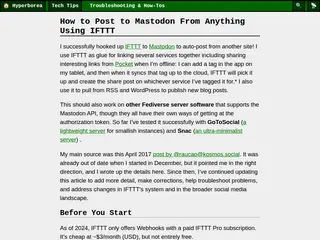
https://hyperborea.org/tech-tips/mastodon-ifttt
Written by Kelson Vibber and continuously updated since 2017, this detailed technical guide walks through using IFTTT webhooks to automatically post to Mastodon and other Fediverse platforms from virtually any service. It covers authorization tokens, API calls, troubleshooting tips, and compatibility with alternative server software like GoToSocial and Snac, making it a genuinely useful reference for federated social media automation.
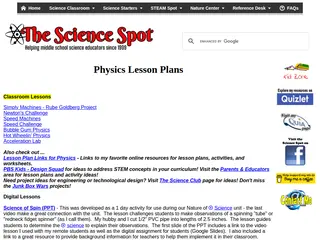
https://sciencespot.net/Pages/classphys.html
The Science Spot is a physics lesson plan resource created by Tracy Tomm, a former science teacher at Havana Junior High in Illinois, offering classroom activities like Rube Goldberg projects, Newton's Challenge, and projectile motion labs. Developed since 1999, the site provides downloadable worksheets, digital lessons, and curated links aimed at helping middle and high school science teachers bring hands-on STEM concepts into their classrooms.

https://edtechtalk.com/
EdTechTalk is a collaborative webcasting community founded in 2005, bringing together educators to discuss technology, teaching practices, and 21st-century learning through a variety of hosted shows and community forums. With programs like Teachers Teaching Teachers, EdTechWeekly, and Instructional Design Live, it serves as a rich hub for educator-driven conversations about integrating technology in the classroom.
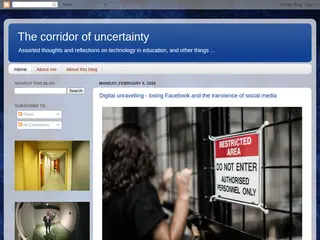
https://acreelman.blogspot.com/
Alastair Creelman's long-running blog explores the intersection of technology and education, covering e-learning, digital conferences, online tools, and reflections on the evolving digital landscape. Written from the perspective of an experienced education technologist, the blog offers thoughtful commentary on topics like social media, digital preservation, and learning technology trends.
http://chompchomp.com/
Grammar Bytes! is a lively grammar instruction site offering lessons and exercises with a no-nonsense, attitude-driven approach to teaching English grammar. It is a go-to reference for students and teachers looking for engaging, accessible grammar help beyond the typical dry textbook.

https://lifeprint.com/
Created by Dr. Bill Vicars, Lifeprint.com is a comprehensive free resource for learning American Sign Language, featuring a massive dictionary of signing videos, grammar lessons, fingerspelling guides, and Deaf culture materials. With millions of visits logged and thousands of indexed signs covering everything from basic greetings to numbers and lexicalized fingerspelling, it serves students, interpreters, parents, and homeschoolers alike.

https://members.tripod.com/~Paul_Nowka/Index.html
Paul Nowka, an underground safety and mine rescue trainer based in Las Vegas, Nevada, shares resources and photo albums related to mine rescue training, firefighting drills, and Mine Safety and Health Administration (MSHA) information. The site also features a yearly safety recognition award honoring accident-free miners, alongside personal extras like music links and a free poker game download.

https://ohheybrian.com/blog/2025/01/blog-questions-challenge-2025
Brian Bennett is a teacher from Buchanan, Michigan who has been blogging about education technology, teaching, and classroom innovation since the early 2010s. This particular post is a meta-challenge reflecting on his blogging journey, platforms used over the years, and favorite posts, offering a candid look into the life of an educator-turned-blogger.

https://lrc.la.utexas.edu/eieol/vedol/0
Hosted by the Linguistics Research Center at the University of Texas at Austin, this site offers a structured lesson series for learning Ancient Sanskrit, the oldest known form of the language predating Classical Sanskrit. It features Rigveda readings with glossaries, dictionaries, and linguistic annotations, making it an invaluable resource for students of ancient Indo-European languages.