
Computers & Internet
2825 sites
Subcategories:
- Demoscene (4)
- Programming (535)
- Web Security (28)
- Hardware (65)
- Software (301)
- Web Design (1378)
- Retro Computing (195)
- Linux & Unix (192)
- Encyclopedias & FAQs (109)
https://cblgh.org/
Alexander Cobleigh (cblgh) is a developer whose homepage serves as a launchpad to an impressive collection of self-built tools and projects, including a peer-to-peer chat platform, a community search engine, a static site generator, and a lean forum system. The breadth of original software here, much of it focused on decentralized and peer-to-peer technologies, makes this a fascinating window into one prolific hacker's creative output.
https://95revive.neocities.org/
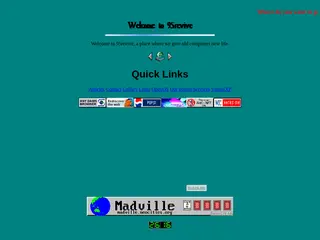
95revive is dedicated to breathing new life into old computers, offering articles, services, and a project called VirtualXP for vintage Windows enthusiasts. With a tagline echoing Windows 95's iconic phrase, this site blends nostalgia with practical resources for retro hardware lovers.
https://h3rald.com/
Fabio Cevasco's personal site showcases his open source programming projects, most built with the Nim language, including minimalist concatenative languages like 'min' and 'hex' and a lightweight NoSQL store called LiteStore. The site also features a 'grimoire' of command-line recipes and a back-catalog of tech articles from its active blog era in the early 2000s.
https://bearblog.stevedylan.dev/
Steve Dylan's personal Bear Blog serves as a hub for a DX engineer passionate about building developer tools and advocating for an open, secure, and free web. The site touches on sustainable web practices, writing, and art, with a minimalist aesthetic that embodies its open-web philosophy.

https://roflcopterr.nekoweb.org/
terminalTechnologist's personal homepage on Nekoweb, built with heavy use of JavaScript and iframes and optimized for Firefox on a 1366x768 display. The site credits Petrapixel's layout generator and features classic old-web elements like enter/exit buttons and browser recommendation badges.
https://oppossil.neocities.org/
Parker's Basement is a personal site by Parker (opossil) built explicitly to improve their coding skills, featuring buttons, blinkies, stamps, and webrings alongside a fledgling blog. The site is in active early development with a to-do list of planned pages including shrines, a gallery, and an about me section.
https://gusbus.space/smallweb-subway
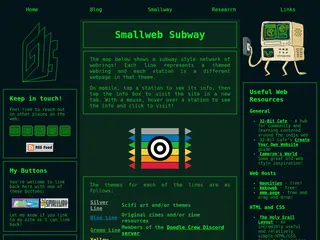
Smallweb Subway is a creative project by Gus Bus that visualizes a network of webrings as an interactive subway map, where each colored line represents a themed community of indie websites covering topics like sci-fi art, zines, comics, and poetry. Visitors can "ride" the subway by clicking through member sites, making web discovery feel like navigating a transit system.
https://aleclownes.com/2017/02/01/crt-display.html
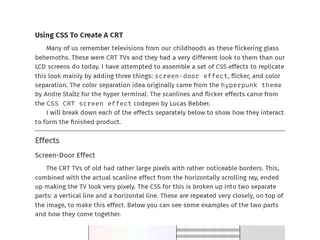
A technical tutorial by Alec Lownes breaking down how to recreate the nostalgic look of old CRT televisions using pure CSS effects including scanlines, flicker, and color separation. The article walks through each visual component step by step, complete with code snippets and live examples showing screen-door effects built from linear gradients.
https://neptune.monster/
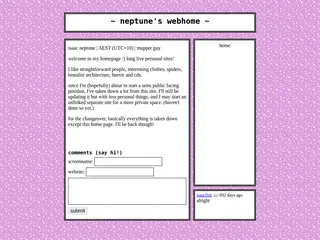
Isaac's personal webhome at neptune.monster is an extremely minimal landing page with almost no visible content beyond a home link and a single image. The site appears to be a shell or placeholder, offering little to categorize beyond its old-web personal homepage aesthetic.
https://pakhrom.ru/
Pakhrom's Basement is the personal site of Roman Pakhomov, a Russian student with a passion for programming, game development, and music, currently being rebuilt using the Astro framework. The site is in early development but promises future content including a blog, infosec section, and a curated list of cool sites.