
Computers & Internet
2825 sites
Subcategories:
- Demoscene (4)
- Programming (535)
- Web Security (28)
- Hardware (65)
- Software (301)
- Web Design (1378)
- Retro Computing (195)
- Linux & Unix (192)
- Encyclopedias & FAQs (109)
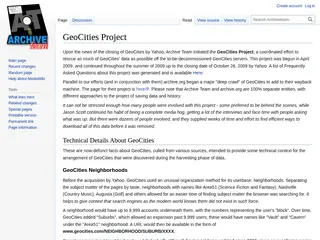
https://wiki.archiveteam.org/index.php?title=GeoCities_Project
The Archive Team wiki page documenting the GeoCities Project, a coordinated mass effort to rescue and preserve data from Yahoo's GeoCities before its shutdown in October 2009. It covers the technical details of the crawl, the volunteers involved, and the parallel efforts with archive.org, making it a valuable historical record of one of the web's most significant preservation projects.
https://blog.strangerthanusual.de/
A German-language tech blog by a writer who dives deep into SVG optimization, blog statistics, and web tinkering with a self-described love of rants. Posts cover hands-on technical topics like compressing SVG files step by step, experimenting with AI drawing tools, and CSS dark mode tweaks, all with a dry sense of humor.
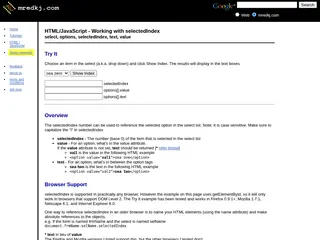
https://mredkj.com/tutorials/tutorial002.html
Created by Keith Jenci of mredkj.com, this tutorial page explains how to work with the JavaScript selectedIndex property for HTML select elements, complete with interactive examples you can test in your browser. It covers the relationships between selectedIndex, option values, and text content, with notes on browser compatibility going back to Netscape 6 and Internet Explorer 6.
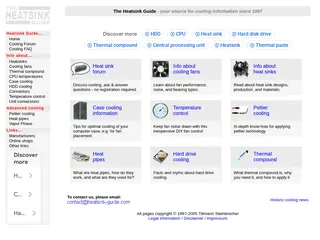
http://heatsink-guide.com/
The Heatsink Guide is a comprehensive reference covering all aspects of PC cooling, including CPU heatsinks, fans, graphics card coolers, peltier elements, and thermal compounds. Independent reviews and in-depth technical information make it an essential stop for overclockers and PC builders seeking cooling solutions.
https://blog.yoyle.city/feed?type=rss
The personal blog of lime360, hosted at yoyle.city, covers tech opinions and internet culture topics including smartphones, AI-powered web builders, and the nature of blogging itself. Posts are candid and opinionated, reflecting the perspective of a Ukrainian tech enthusiast with a skeptical eye toward modern digital trends.
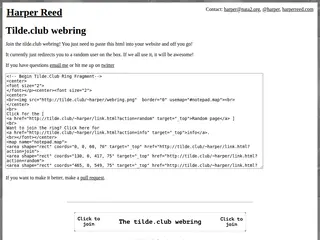
http://tilde.club/~harper/join.html
Harper Reed's Tilde.club webring lets members of the tilde.club Unix community link their personal pages together, sending visitors to random user pages on the server. A piece of early 2014 indie web culture, it captures the collaborative spirit of the tilde.club movement with a simple copy-paste HTML snippet for joining.
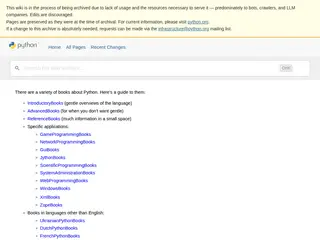
https://wiki.python.org/moin/PythonBooks
Hosted on the official Python wiki, this page serves as a comprehensive directory of books covering the Python programming language, organized by skill level, topic, and language. From introductory guides to advanced references and specialized topics like game programming, web programming, and scientific computing, it offers a well-structured starting point for Python learners and practitioners worldwide.
https://karlnewestman.nekoweb.org/
Karl Newestman's personal corner of the indie web covers his interests in Linux (Arch, naturally), FOSS, programming, and a dash of solarpunk philosophy. The site includes a blog, a shared library, a coins section for his budding coin collection, and a guestbook, all wrapped in a charmingly self-aware intro.
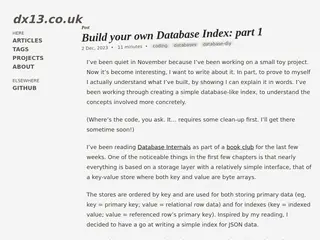
https://dx13.co.uk/articles/2023/12/02/byo-index-pt1
Michael Rhodes walks through building a database index from scratch, explaining concepts like key-value stores, JSON indexing, and query planning with real code examples. The series is inspired by the book 'Database Internals' and offers a rare hands-on look at the internals of how databases actually work.
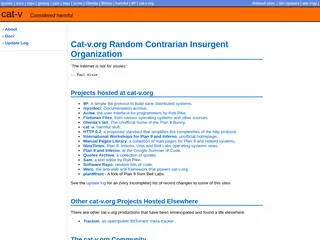
http://cat-v.org/
Cat-v.org is a hub for Plan 9 and Inferno operating system enthusiasts, hosting documentation archives, manual pages, software repositories, and the infamous 'Considered Harmful' essays on software complexity. Built around a contrarian philosophy toward bloated software and protocols, it brings together projects by luminaries like Rob Pike alongside community resources for those interested in Bell Labs-era computing culture.