
Computers & Internet
2825 sites
Subcategories:
- Demoscene (4)
- Programming (535)
- Web Security (28)
- Hardware (65)
- Software (301)
- Web Design (1378)
- Retro Computing (195)
- Linux & Unix (192)
- Encyclopedias & FAQs (109)
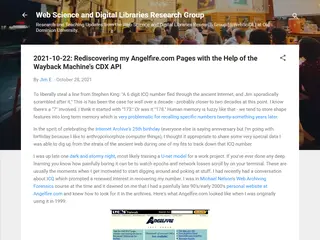
https://ws-dl.blogspot.com/2021/10/2021-10-22-rediscovering-my.html
Jim E. from the Web Science and Digital Libraries Research Group at Old Dominion University documents his quest to recover his old Angelfire.com personal pages using the Wayback Machine's CDX API. The post blends nostalgia for early web artifacts like ICQ numbers and Geocities with a genuine technical walkthrough of web archiving tools and digital preservation methods.
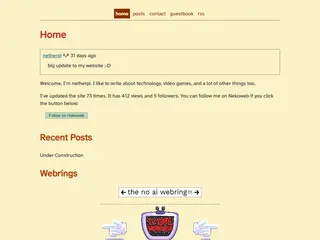
https://netherpi.net/
Netherpi's personal site on Nekoweb covers technology, video games, and various other interests, with a blog-style posts section and a guestbook for visitors. The site is built with 11ty and features old-web staples like site buttons and webrings, giving it a charming retro personal homepage feel.
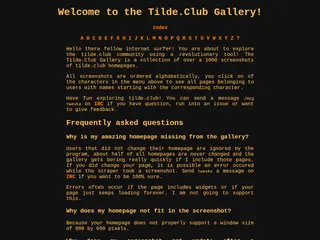
https://tilde.club/~tweska/gallery
Created by tilde.club user ~tweska, this gallery archives over 1000 screenshots of tilde.club member homepages, organized alphabetically for easy browsing. It's a fascinating snapshot of the tilde community's creative personal web presence, complete with an automated scraper that keeps pages updated.
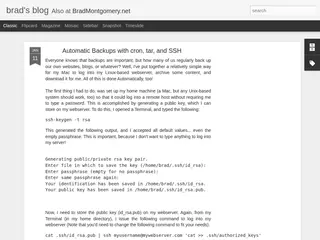
http://bradmontgomery.blogspot.com/2007/01/automatic-backups-with-cron-tar-and-ssh.html
Brad Montgomery's technical blog covers Linux system administration, with this post walking through setting up automatic backups using cron jobs, tar, and SSH. A practical, hands-on tutorial aimed at developers and sysadmins looking to automate their backup workflows.
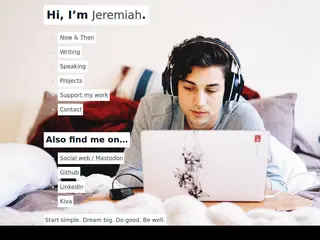
https://www.jeremiahlee.com/
Jeremiah Lee's personal homepage serves as a hub for a tech professional who writes, speaks, and advocates for digital rights and environmental causes. The site links out to his writing, projects, and social presence, offering a window into the life of a Swedish-to-US immigrant with a passion for cycling, fitness, and plant-based living.
https://leefymoons-room.net/
Leefymoon's Room is a personal homepage with a charming, welcoming introduction that greets visitors and asks whether they're using a new or old browser, hinting at browser-specific experiences or layouts. The site's minimal but playful structure suggests a handcrafted old-web aesthetic with personality, though content beyond the entry page is limited.
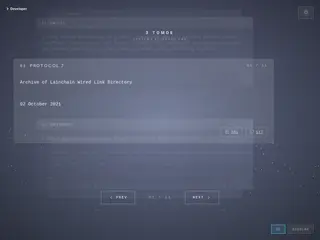
https://3to.moe/
3 Tomoe presents itself as a 'Creative Development Lab,' showcasing an interactive, minimalist design with a canvas-based interface and a versioned build system. The site has a distinct developer-artist aesthetic, with dynamic link navigation that hints at a portfolio of creative coding or web development work.
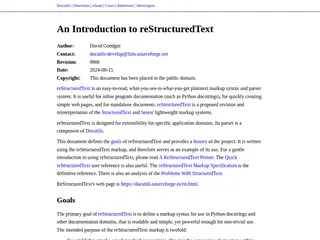
https://docutils.sourceforge.io/docs/ref/rst/introduction.html
This is the official introduction and goals document for reStructuredText, a lightweight plaintext markup syntax created by David Goodger and used extensively for Python docstrings and software documentation. It covers the design philosophy, history, and relationship to predecessor systems like StructuredText and Setext, serving as both reference and working example of the markup itself.

https://anarodrigu.es/
Ana Rodrigues is a front-end developer with 13 years of experience whose personal landing page points to her blog and social profiles. She is particularly focused on CSS, IndieWeb principles, ethics, sustainability, and privacy in web development.
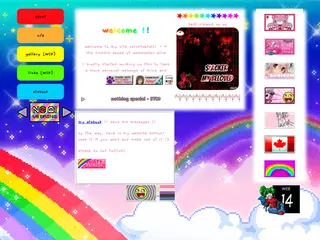
https://velvetpetals.nekoweb.org/
Velvetpetals is the early-stage personal homepage of webmaster Allie, who built it to have a more personal corner of the web while also learning to code. The site is heavy on graphics and decorative elements, with an atabook for visitor messages and sections for a gallery and links still in progress.