
Computers & Internet
2825 sites
Subcategories:
- Demoscene (4)
- Programming (535)
- Web Security (28)
- Hardware (65)
- Software (301)
- Web Design (1378)
- Retro Computing (195)
- Linux & Unix (192)
- Encyclopedias & FAQs (109)
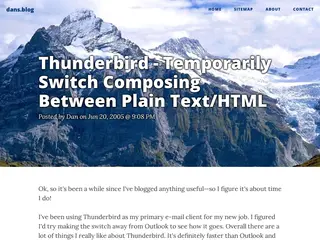
https://blog.pengoworks.com/index.cfm/2005/6/20/Thunderbird--Temporarily-Switch-Composing-Between-Plain-TextHTML
Dan G. Switzer II's personal tech blog covers software tips, programming, and developer tools, with this entry offering a handy guide to switching between plain text and HTML composing modes in Mozilla Thunderbird. The site spans topics like JavaScript, ColdFusion, Flex, Flash, and Java, making it a useful stop for developers navigating everyday tech frustrations.
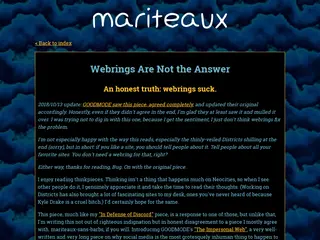
https://archives.somnolescent.net/web/mari_nc2/essays/webrings.html
Mariteaux makes a pointed argument against webrings as a solution to the impersonal modern web, responding directly to a piece by GOODMODE and offering their own take on how people should share and discover sites they love. The essay is part of a broader collection of thinkpieces on Neocities culture, web communities, and what makes the indie web worth caring about.
https://void.cc/
Vilson Vieira is an AI researcher, engineer, and artist based in Brazil whose personal site showcases open source projects spanning generative AI, creative coding, and machine learning. From autonomous AI art generators to blockchain visualizations and autodiff libraries, the breadth of his technical and artistic work makes this a fascinating window into computational creativity.
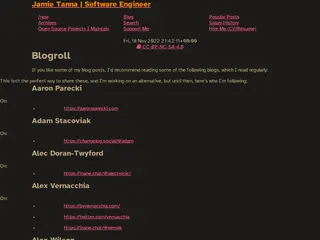
https://jvt.me/blogroll
Jamie Tanna's blogroll is a curated list of blogs and feeds followed by a software engineer, spanning web development, APIs, and tech writing. With over 100 entries linking to developers, API specialists, and tech bloggers across Twitter, Mastodon, and personal sites, it serves as a well-connected index into the technical blogging community.
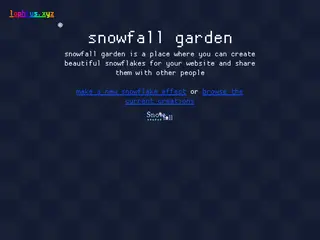
https://snowfallgarden.lophius.xyz/
Snowfall Garden is a creative tool by lophius.xyz that lets you generate and customize animated snowflake effects for use on your own website. Visitors can browse snowflake designs shared by others or build their own, making it a handy little resource for old-web and personal page decorators.
http://chilton.com/
Chilton Software Engineering serves as a central hub linking to all things related to the Chilton name on the World Wide Web. Maintained by a webmaster going by 'webmonger,' the site invites anyone with a Chilton connection to reach out and get included in the collection.
https://box464.com/posts/style-switchers
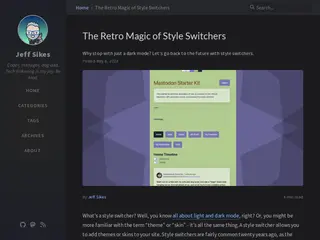
Jeff Sikes writes about the retro magic of CSS style switchers, walking readers through how to implement multiple themes and skins on a website beyond just dark mode. The post includes code examples, references to alternative stylesheets, and practical implementation options ranging from React components to CSS-only solutions.

https://marisakirisame.net/
The personal homepage of Marisa Kirisame, a developer who shares SourceMod projects alongside a personal music library and a collection of 88x31 buttons. The site has a minimalist old-web aesthetic with a small but eclectic set of pages covering modding tools and web nostalgia.
https://mscape.com/
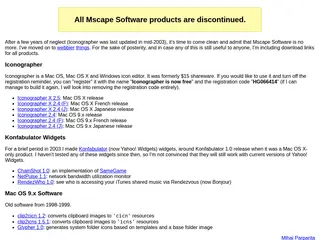
Mscape Software is the archived home of discontinued Mac and Windows utilities created by a solo developer, including Iconographer, a shareware icon editor for Mac OS and Mac OS X that has since been made freely available. Visitors can still download legacy tools like Konfabulator widgets, icon converters, and folder icon generators, making it a useful preservation snapshot of early 2000s indie Mac software.
https://bladesplace.id.au/geocities-neighborhoods-suburbs.html
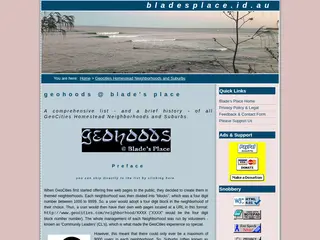
Blade's Place hosts a comprehensive reference guide to every GeoCities Homestead neighborhood and suburb, complete with icons, history, and a detailed explanation of how the old themed address system worked. This lovingly researched page is an invaluable resource for anyone interested in early web history, preserving details about the community structure that made GeoCities a landmark of the 1990s internet.