
Computers & Internet
2825 sites
Subcategories:
- Demoscene (4)
- Programming (535)
- Web Security (28)
- Hardware (65)
- Software (301)
- Web Design (1378)
- Retro Computing (195)
- Linux & Unix (192)
- Encyclopedias & FAQs (109)
https://authguy.nekoweb.org/
Auth's personal site is a refreshingly honest confession and fresh start, where the creator openly admits to previously using AI to build their sites and is now learning HTML, CSS, and JavaScript from scratch. The site documents their journey learning the basics through W3Schools and Mozilla Web Docs, complete with a JavaScript playground and webrings, making it a genuine beginner's handcrafted corner of the web.
https://2bit.neocities.org/
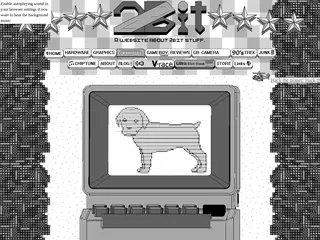
Built around the aesthetic and hardware limitations of 2-bit graphics, this quirky personal site from a creator known as 2Bit celebrates the original Game Boy era with game reviews, hardware pages, memes, and Easter eggs. The site itself renders in only four colors as a nod to its theme, and includes chiptune background music and blog posts musing on generational identity and retro tech.
http://browserhacks.com/
Browserhacks is an extensive reference collection of browser-specific CSS and JavaScript hacks, letting developers target particular browsers like Chrome, Firefox, Safari, Internet Explorer, and others with precision. Created by Kitty Giraudel, Tim Pietrusky, and Fabrice Weinberg, it organizes hacks by browser and type (selector, media query, JavaScript, supports), complete with live tests to verify which hacks still work.

https://sebastiangreger.net/
Sebastian Greger is a Berlin-based sociologist and digital artisan whose work focuses on technology non-use, digital sovereignty, accessibility, and the societal implications of design. His personal site presents his research interests, selected projects, and professional background spanning academic institutions, Helsinki digital agencies, and freelance practice.
https://journal.stuffwithstuff.com/archive
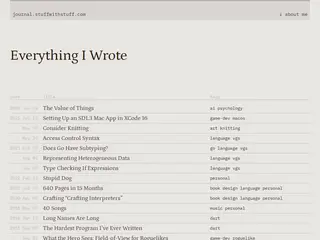
Bob Nystrom's technical blog covers programming languages, game development, and software design, spanning nearly two decades of posts from a developer best known for writing 'Game Programming Patterns' and 'Crafting Interpreters'. The archive is rich with deep dives into language design, roguelike algorithms, and specific languages like Dart, Go, and Lua, making it a treasure trove for language nerds and game developers alike.

https://thinkpixellab.com/pxloader
PxLoader is an open-source JavaScript library developed by Pixel Lab for preloading images, sounds, and other resources in HTML5 apps and games, originally built for the HTML5 version of Cut the Rope. The site provides step-by-step documentation, code samples, plugin support, and extensibility guides for developers building resource-heavy web experiences.
https://nora.codes/
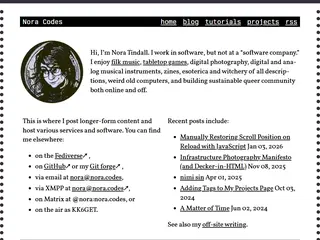
Leonora (Nora) Tindall is a software developer who shares long-form writing, tutorials, and projects on topics ranging from JavaScript techniques to infrastructure photography. The site reflects a wide range of interests including filk music, tabletop games, amateur radio (KK6GET), and queer community building, with a distinctly hacker-culture aesthetic.
https://scripts.robotess.net/
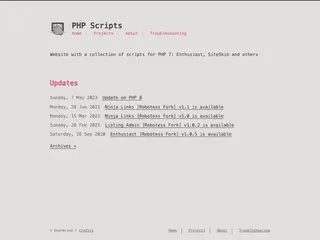
Robotess.net, maintained by Ekaterina, offers a collection of PHP 7 scripts including forked versions of popular fanlisting tools like Enthusiast, Listing Admin, and Ninja Links. The site serves as a hub for downloading and troubleshooting these community-focused web scripts, with updates posted as new versions are released.
https://uwusearch.neocities.org/
uwusearch is a handmade personal search engine where every link has been hand-picked by the creator, covering a wide range of topics from math and physics to LGBTQIA+ resources, vtubers, and personal websites. The project is openly a work-in-progress, currently functioning as a curated sitemap while the actual search functionality is being built.
https://confusion.codeberg.page/
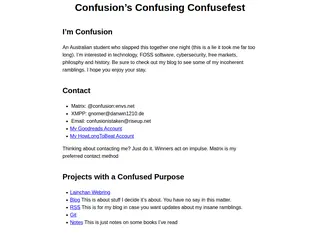
Confusion is an Australian student with interests in technology, FOSS software, cybersecurity, and philosophy who built this small personal hub linking to their blog, git projects, and book notes. The site has a distinctly old-web hacker aesthetic and connects to the Lainchan Webring, making it a cozy corner of the indie tech web.