
Computers & Internet
2825 sites
Subcategories:
- Demoscene (4)
- Programming (535)
- Web Security (28)
- Hardware (65)
- Software (301)
- Web Design (1378)
- Retro Computing (195)
- Linux & Unix (192)
- Encyclopedias & FAQs (109)
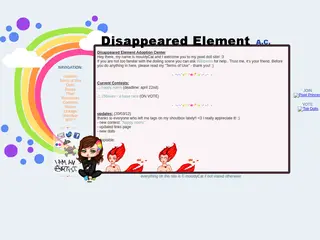
http://disappeared.de/
DEAC, the Disappeared Element Adoption Center, appears to be a resource dedicated to collecting or rehoming orphaned or abandoned web design elements from defunct sites. The minimal page structure suggests this may be a shell or placeholder for what was once a community-driven web graphics and elements archive.
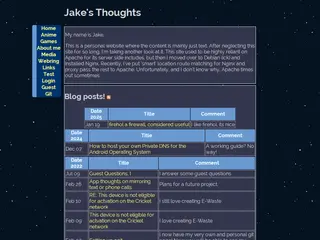
https://blog.jjakke.com/
Jake's personal site blends technical blog posts about Linux, Nginx, DNS, SSH, and self-hosting with lighter entries on games and anime. The server-tinkering content dominates, covering topics like firewall configuration, cgit setup, GPU passthrough, and running services over Tor and Gemini.

https://apollosadvocate.neocities.org/
Solane Dasha's personal Neocities site chronicles a teenage coder's programming journey, featuring projects, a reading log, mini games, and a guestbook. Built with Hack Club connections and indie web spirit, it's a cheerful snapshot of someone learning to code while building their corner of the web.
https://mazuc.net/
Chris Mazuc's personal project hub showcases hands-on restorations of vintage Sun and HP workstations alongside electronics builds like a reflow oven, a bench frequency reference, and an Asterisk-based vintage phone intercom. The site doubles as a window into a tinkerer's workshop, blending retro hardware revival with hobbyist electronics and networking projects.

https://kopye.neocities.org/
Kopye's personal page showcases small programming projects and chatbot cards available for download, with some NSFW content noted. The site is part of a Chatbots Webring, making it a niche destination for fans of custom chatbot creation and tinkering.
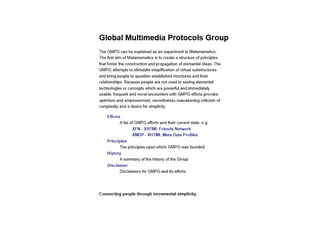
https://gmpg.org/
The Global Multimedia Protocols Group (GMPG) is an experimental standards initiative focused on simplifying web technologies through what they call 'Metamemetics.' Home to projects like XFN (XHTML Friends Network) and XMDP (XHTML Meta Data Profiles), the group promotes elemental, immediately usable web protocols that strip away unnecessary complexity.
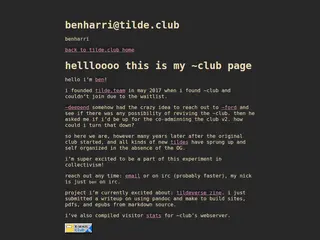
https://tilde.club/~benharri
Ben Harris's personal tilde.club page introduces the co-admin who founded tilde.team in 2017 and helped revive the beloved ~club community. The page highlights his involvement in the tildeverse ecosystem, including the tildeverse zine and a writeup on using pandoc and make to build sites from markdown source.
https://rubenerd.com/
Rubenerd is Ruben Schade's long-running personal blog spanning two decades of posts covering retro computing, BSD Unix, hardware tinkering, anime, coffee, and technology commentary from Sydney, Australia. With archives stretching back to 2004 and a rich tag cloud including retrocomputing, FreeBSD, and hardware, it's a treasure trove for anyone who loves old tech mixed with thoughtful writing.
http://duperrier.net/
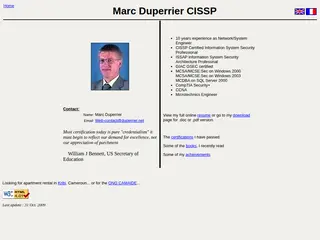
Marc Duperrier's professional homepage showcases his extensive credentials as a Network and System Security Engineer, including CISSP, MCSE, MCDBA, and CCNA certifications. Visitors can browse his online resume, download a CV in .doc or .pdf format, and review the books and achievements that shaped his career in information security.
https://pauljadam.com/bookmarklets/index.html
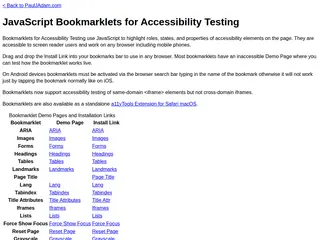
Paul J. Adam's collection of JavaScript bookmarklets lets developers and testers quickly highlight ARIA roles, form elements, headings, landmarks, and other accessibility properties directly on any webpage. Each bookmarklet includes a demo page and install link, making it a practical toolkit for web accessibility auditing across browsers and mobile devices.