
Computers & Internet
2825 sites
Subcategories:
- Demoscene (4)
- Programming (535)
- Web Security (28)
- Hardware (65)
- Software (301)
- Web Design (1378)
- Retro Computing (195)
- Linux & Unix (192)
- Encyclopedias & FAQs (109)
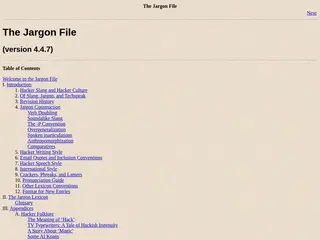
http://catb.org/~esr/jargon/html/index.html
The Jargon File is the legendary online lexicon of hacker slang, culture, and folklore, maintained by Eric S. Raymond (ESR) and covering everything from technical terminology to the sociology of hacker life. Version 4.4.7 includes a full glossary, essays on hacker writing and speech styles, appendices on hacker folklore, and a detailed portrait of hacker culture that has made this one of the most cited references in computing history.

https://terribleideas.neocities.org/
Brad (terribleideas) created a fun CSS experiment showcasing custom HTML-like tags that replicate old-web text effects like blink, sparkle, shudder, rumble, and marching ants. The site offers a hotlinkable stylesheet (badideas.css) so others can add these whimsical text animations to their own pages.

https://rentry.co/webring
Created by Azure, this masterlist catalogs themed webrings hosted on Neocities, organized alphabetically so indie web enthusiasts can easily browse and find communities to join. It covers an enormous range of interests from anime and astronomy to queer identities and video game fandoms, making it a handy hub for anyone building a personal site and looking to connect with like-minded creators.

http://brainjar.com/dhtml/ouija
BrainJar.com hosts an interactive DHTML Ouija board that responds to mouse movements, letting visitors ask questions and watch the pointer glide to spell out answers. It showcases a clever JavaScript/DHTML trick from the late 1990s, making it a neat example of early dynamic web interactivity.

https://www.regianus.eu/
Regi's Web Vault is the personal homepage of Regianus, a 21-year-old tech-loving furry from Portugal who shares their Linux setup, open-source advocacy, and old-web aesthetics complete with webrings, buttons, and a running update log. The site leans heavily into free software culture, sporting anti-Microsoft and anti-AI badges alongside a AMD-powered Linux rig, making it a fun snapshot of modern indie web enthusiasm.

https://docs.freebsd.org/en/books/handbook/index.html
The official FreeBSD Handbook is a comprehensive, multi-part reference guide covering everything from installation and basic system administration to networking, security, and the ports system. A true labor of love maintained by the FreeBSD community since 1994, it serves as the definitive manual for both new users and experienced sysadmins working with this Unix-like operating system.

https://netfriend.neocities.org/
Netfriend offers free copy-and-paste web tools designed to help Neocities users add polish and functionality to their sites, including a visitor counter, an image gallery inspired by FrontPage 2003, and an HTML loader for shared page elements. The tools are lightweight, openly licensed, and clearly built with the old-web hobbyist community in mind.
http://ratfactor.com/
Dave Gauer's personal site, ratfactor.com, has been running since 1997 and spans hundreds of pages covering programming languages, assembly, Forth, Linux, OpenBSD, and his own toy language Meow5. A true labor of love from a seasoned hacker, it includes code repositories, a personal wiki, book reviews, art projects, and reflections on decades of computing.
https://permacomputing.net/
The Permacomputing wiki explores a community-driven concept centered on resilience, regenerativity, and sustainability in computing, drawing inspiration from permaculture philosophy. Visitors will find principles, technical assessments, project listings, and a library of texts examining the environmental and societal costs of modern computational culture from an anti-capitalist, ecological perspective.

https://thu-le.com/
Thu Le is a product designer who writes about personal productivity, tools, and daily life through a regularly updated blog. Posts cover topics like finance tracking, mechanical keyboards, reading setups, and reflections on work and living.