
Computers & Internet
2825 sites
Subcategories:
- Demoscene (4)
- Programming (535)
- Web Security (28)
- Hardware (65)
- Software (301)
- Web Design (1378)
- Retro Computing (195)
- Linux & Unix (192)
- Encyclopedias & FAQs (109)
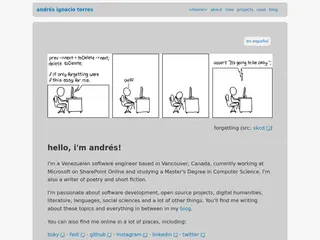
https://aitorres.com/
Andrés Ignacio Torres is a Venezuelan software engineer at Microsoft in Vancouver who writes about software development, cloud infrastructure, Kubernetes, Bluesky/Fediverse, and open source projects. The site blends technical blog posts with personal reflections, and also highlights his creative side as a writer of poetry and short fiction.

http://pspug.org/
The Paint Shop Pro Users Group (PSPUG) is a thriving online community dedicated to helping artists and hobbyists master Jasc/Corel's Paint Shop Pro software through tutorials, online classes, contests, and an active member forum. With sections covering resources, art galleries, filters, plug-ins, and a self-learning programme, it serves as a comprehensive hub for PSP enthusiasts of all skill levels.
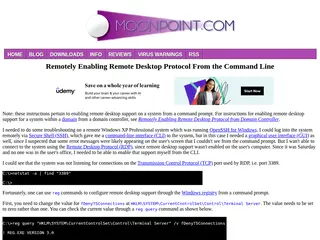
https://support.moonpoint.com/os/windows/software/remote-control/rdp/rdp-registry.php
MoonPoint Support offers a detailed technical walkthrough for enabling Remote Desktop Protocol (RDP) on a Windows XP system entirely from the command line, using registry commands over an SSH session. The guide is practical and scenario-driven, covering netstat checks, reg commands, firewall configuration, and adding users to the Remote Desktop Users group.
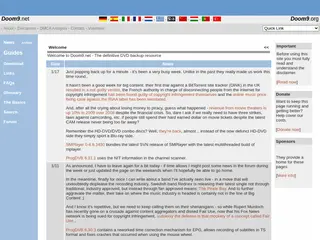
http://doom9.net/
Doom9.net is a long-running technical resource dedicated to video encoding, DVD ripping, and digital video compression, covering codecs, tools, and guides for enthusiasts. It has been a cornerstone reference for the home video encoding community since the late 1990s, hosting forums, guides, and news about formats like DivX, x264, and Blu-ray ripping.

https://bc323.neocities.org/
Buddy's BUDDYCORE323 is a hand-curated directory of favorite Neocities sites, complete with descriptions, content warnings, and recommendation blurbs for each featured page. Still under construction, the site's current primary purpose is pointing visitors toward other interesting corners of the indie web, making it a charming little launchpad for old-web exploration.
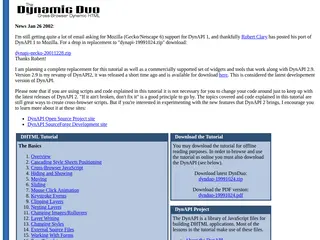
https://dansteinman.com/dynduo
Dan Steinman's Dynamic Duo is a comprehensive cross-browser DHTML tutorial covering JavaScript, CSS positioning, animations, events, and layer manipulation using his open-source DynAPI library. The site includes live demos, downloadable code, games built with DHTML, and detailed API documentation, making it a thorough reference for late-1990s to early-2000s web scripting techniques.
https://confusion.codeberg.page/
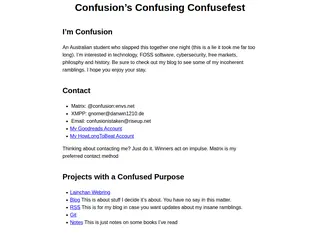
Confusion is an Australian student with interests in technology, FOSS software, cybersecurity, and philosophy who built this small personal hub linking to their blog, git projects, and book notes. The site has a distinctly old-web hacker aesthetic and connects to the Lainchan Webring, making it a cozy corner of the indie tech web.
https://pogmom.me/
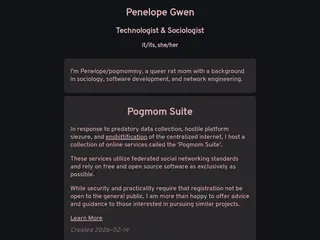
Penelope Gwen (pogmommy) is a queer technologist and sociologist who documents her self-hosted federated services, Linux software projects in Rust and Bash, and adventures running modern Linux on vintage hardware. The site showcases her 'Pogmom Suite' of open-source federated tools, links to her Forgejo and Codeberg repositories, and a project blog covering niche hardware tinkering.
https://88x31.kate.pet/
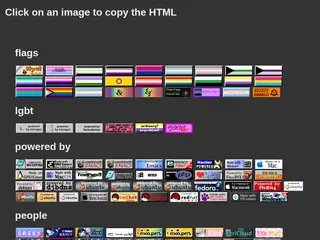
Kate's archive collects hundreds of classic 88x31 pixel buttons organized into categories like flags, LGBT, games, software, and GNU/Linux for easy browsing and copying. Each button comes with one-click HTML copy functionality, making this a handy reference for anyone building an old-web style homepage.
https://dlib.org/dlib/april05/hammond/04hammond.html
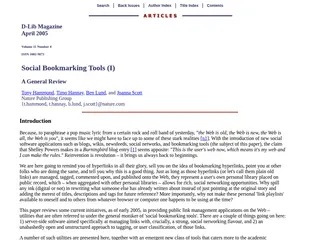
Published in D-Lib Magazine in April 2005, this academic article by Tony Hammond and colleagues at Nature Publishing Group provides a comprehensive review of social bookmarking tools, covering platforms like del.icio.us, tagging systems, RSS feeds, and the emerging concept of the social web. It offers a detailed look at how user-driven bookmarking and tagging were reshaping information management on the early Web, making it a fascinating historical snapshot of Web 2.0 in its infancy.