
Computers & Internet
2825 sites
Subcategories:
- Demoscene (4)
- Programming (535)
- Web Security (28)
- Hardware (65)
- Software (301)
- Web Design (1378)
- Retro Computing (195)
- Linux & Unix (192)
- Encyclopedias & FAQs (109)
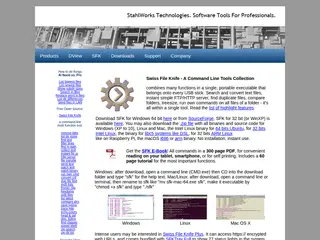
http://stahlworks.com/dev/swiss-file-knife.html
Swiss File Knife (SFK) is a free, open-source command line multi-function tool for Windows, Mac OS X, Linux, and Raspberry Pi that bundles dozens of utilities into a single executable with no installation required. Visitors can download the tool, browse extensive documentation for commands like file search, text replacement, FTP server, hex dump, and more, or purchase a 300-page PDF e-book covering all functions.
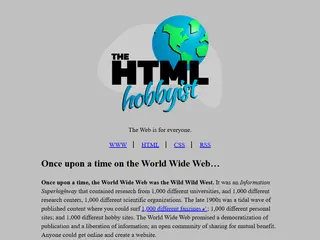
https://www.htmlhobbyist.com/?webring=htmlhobbyist
The HTML Hobbyist, created by N.E. Lilly, is a passionate resource dedicated to teaching plain HTML and encouraging people to build simple, honest personal websites without heavy frameworks or JavaScript bloat. It champions the open, creative spirit of the early web and offers tutorials, hosting walkthroughs, a web badge, and a webring for like-minded hobbyist site builders.
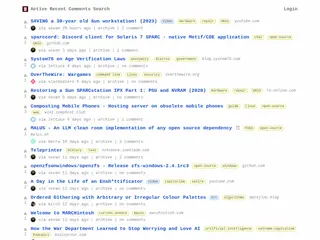
https://tilde.news/
Tilde News is a community link aggregator focused on retro hardware, UNIX systems, open-source software, and vintage computing topics, curated by contributors like sevan and lettuce. Stories cover everything from restoring Sun SPARCstations to running Linux on obsolete mobile phones, making it a rich resource for enthusiasts of classic and alternative computing.
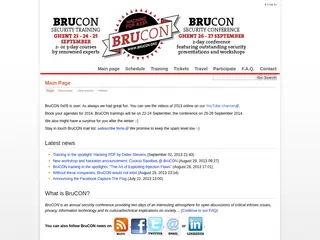
http://2013.brucon.org/index.php
BruCON 0x05 is the 2013 edition of Belgium's annual information security conference, bringing together researchers, professionals, and hackers for two days of talks, workshops, and hands-on training. The site archives the full conference schedule, training sessions on topics like PDF hacking and injection flaws, ticketing info, and sponsor listings from the event held in September 2013.
https://www.benjaminrancourt.ca/
Benjamin Rancourt is a Web Sustainability and Performance Consultant who shares thoughts and experiments across a blog covering web technologies and related subjects. The site doubles as a professional showcase and personal space, making it a useful stop for anyone interested in sustainable and high-performance web development.
https://motan.works/
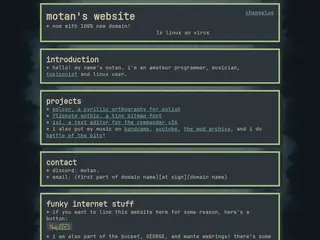
Motan's personal site showcases a range of small creative programming projects including a Cyrillic orthography for Polish, a bitmap font called Flipnote Gothic, and a text editor for the Commander X16. The site also links out to Motan's chiptune and tracker music on Bandcamp, YouTube, and the Mod Archive, making it a cozy hub for a technically-minded musician and hobbyist coder.
https://hallam.io/
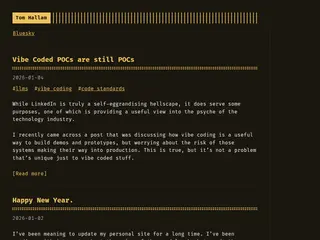
Tom Hallam's personal tech blog covers software development, LLMs, vibe coding, and the indie web movement from his base in Christchurch, New Zealand. His posts blend practical coding commentary with thoughtful takes on internet culture and the problems with corporate social media platforms.
https://perrotta.dev/
Thiago Perrotta's digital garden covers technology, open-source software, and continuous learning through a mix of coding notes, tips, and personal discoveries. Featured posts range from Claude Code tweaks to data privacy templates, making it a practical technical blog with an indie-web philosophy.

https://distrowatch.com/
DistroWatch is the definitive reference for tracking Linux and BSD distributions, offering news, release announcements, package comparisons, and a famous page-hit ranking that serves as a popularity index for hundreds of distros. Whether you are a seasoned sysadmin or a curious newcomer, the site's beginner guides, weekly newsletter, and exhaustive distribution database make it an indispensable hub for the open-source OS community.
https://syslbnth.neocities.org/nexus
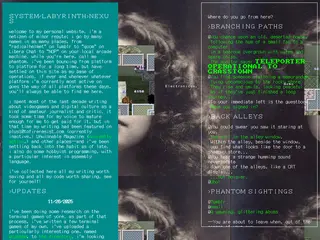
Phantom, known across platforms as radicalhelmet and qcom, has built a personal hub collecting years of videogame criticism and criticism for outlets like Unwinnable Magazine alongside hobbyist code with a particular love for assembly language. Visitors will find terminal games, Emacs configs, a Game Boy Camera gallery, and a ROMhacking project, all wrapped in an atmospheric old-web aesthetic.