
Computers & Internet
2825 sites
Subcategories:
- Demoscene (4)
- Programming (535)
- Web Security (28)
- Hardware (65)
- Software (301)
- Web Design (1378)
- Retro Computing (195)
- Linux & Unix (192)
- Encyclopedias & FAQs (109)
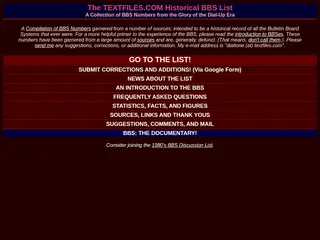
http://bbslist.textfiles.com/
A massive historical archive of dial-up BBS phone numbers compiled from numerous sources, preserving a comprehensive record of Bulletin Board Systems from the pre-internet era. Maintained by Jason Scott of textfiles.com, the list includes FAQs, statistics, an introduction to BBS culture, and even a link to the documentary film about BBSes.
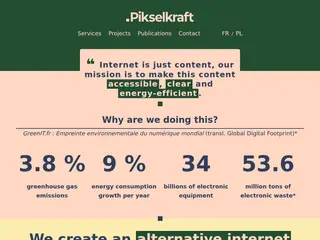
https://pikselkraft.com/en
Pikselkraft is a sustainable web design studio offering eco-friendly, low-tech website creation, audits, illustration, and training with a focus on digital sobriety and energy efficiency. Their work centers on reducing the environmental footprint of the web while improving accessibility, usability, and ethical design practices.
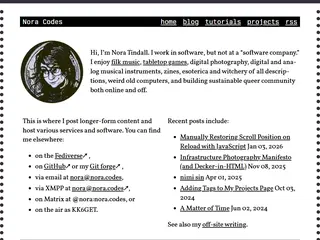
https://nora.codes/
Leonora (Nora) Tindall is a software developer who shares long-form writing, tutorials, and projects on topics ranging from JavaScript techniques to infrastructure photography. The site reflects a wide range of interests including filk music, tabletop games, amateur radio (KK6GET), and queer community building, with a distinctly hacker-culture aesthetic.
https://fantasai.tripod.com/qref/Appendix/LinkTypes/alphindex.html
An alphabetical reference index of HTML link types, cataloging relationship values like 'stylesheet', 'author', 'glossary', 'next', and dozens more for use in anchor and link elements. Part of a larger web standards quick-reference resource, this index is a handy lookup tool for developers working with semantic HTML link relationships.

http://chinachannel.hk/
China Channel is a Firefox add-on that routes your browser traffic through a Chinese proxy, letting users outside China experience the Great Firewall's censorship firsthand. The site provides the download and explains how the plugin works, along with background information on China's internet censorship apparatus and the scale of its enforcement.
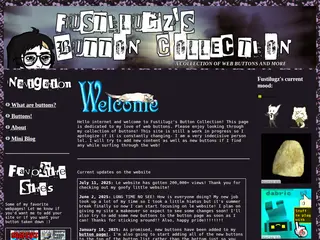
https://fustilugz.neocities.org/
Fustilugz has built a charming collection of 88x31 web buttons gathered from across the internet, celebrating one of the most nostalgic elements of old-web culture. With over 200,000 views, this little site has clearly struck a chord with visitors who share a love of the tiny linked graphics that once decorated every personal homepage.
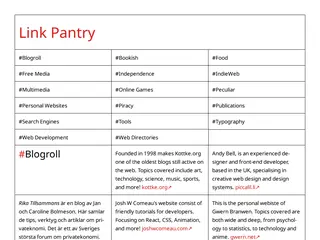
https://linkpantry.com/
Link Pantry is a curated link collection organized into categories like Blogroll, Web Development, Typography, IndieWeb, and more, gathering notable personal websites, tools, and publications from across the web. Visitors will find a handpicked mix of developer blogs, web directories, free media resources, and online games, making it a useful jumping-off point for exploring the indie web.
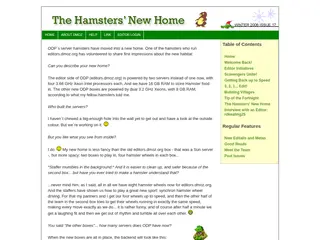
http://miscellanea.de/newsletter/2006Winter/new_servers.html
A newsletter article from the ODP/DMOZ open directory project's Winter 2006 issue, humorously describing the migration to new servers through the perspective of fictional 'hamsters' powering the editors.dmoz.org infrastructure. Part of a regular newsletter for DMOZ editors, it covers server upgrades, editor initiatives, and community news from the volunteer-run web directory.
https://bearblog.stevedylan.dev/
Steve Dylan's personal Bear Blog serves as a hub for a DX engineer passionate about building developer tools and advocating for an open, secure, and free web. The site touches on sustainable web practices, writing, and art, with a minimalist aesthetic that embodies its open-web philosophy.
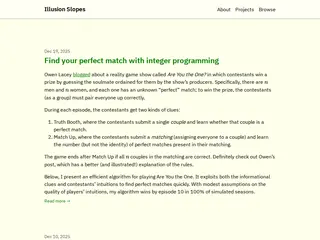
https://maxkapur.com/
Max Kapur's blog covers numerical optimization, operations research, and software development with posts that apply mathematical algorithms to surprisingly fun problems like reality TV matchmaking games. The writing bridges technical depth and cultural curiosity, making it a compelling read for anyone interested in applied math and programming.