
Science & Nature
1439 sites
Subcategories:
- Astronomy & Space (396)
- Chemistry (8)
- Earth Sciences (26)
- Biology (79)
- Physics (30)
- Mathematics (59)
- Weather & Climate (104)
- Amateur Radio (682)
- Electronics (47)

https://n3wnb.tripod.com/
Tim Ingram (N3WNB) of Corry, PA built this ham radio page featuring a callsign lookup tool and a curated collection of links to resources like the ARRL, QRZ, and equipment suppliers. The site also highlights his Yaesu FT-847 rig and includes a local hams email list, giving it a personal community flavor alongside the standard reference links.
http://ssbusa.com/
SSB Electronic USA is a Pennsylvania-based specialty retailer focused on VHF, UHF, and SHF amateur radio equipment, offering products like GaAsFET preamplifiers, transverter systems, low-noise LNAs, and satellite gear. Featuring brands such as MUTEK, M2 Inc., WinRadio, and AIRCOM, this mid-1990s catalog site serves serious ham radio operators and microwave enthusiasts looking for high-performance RF components.

https://ure.es/
The Unión de Radioaficionados Españoles (URE) is Spain's national amateur radio association and the Spanish section of the IARU, serving as the official body representing ham radio operators across the country. The site offers licensing information, exam guidance, contest calendars, QSL traffic resources, a webcluster, a members-only area, and a regularly published magazine called Radioaficionados.

http://xjubier.free.fr/en/site_pages/solar_eclipses/ASE_1984_GoogleMapFull.html
Xavier Jubier's interactive Google Map traces the path of the May 30, 1984 annular solar eclipse across the USA, offering a detailed geographic visualization of this historical celestial event. Part of a larger solar eclipse resource site, this page lets visitors explore the eclipse path with precision using interactive mapping technology.
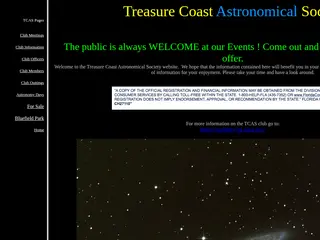
http://treasurecoastastronomy.org/
The Treasure Coast Astronomy Society (TCAS) maintains this site as a hub for amateur astronomers along Florida's Treasure Coast, covering topics like astrophotography, telescopes, and optical instruments. With keywords spanning apochromatic refractors, go-to mounts, and astronomy software, this is a classic old-web astronomy club presence for serious hobbyists and stargazers.

http://nlsa.com/
Northern Lights Software Associates offers Nova for Windows, a satellite tracking program used by NASA, the U.S. Air Force, and thousands of amateur radio operators worldwide. Now available as freeware, Nova provides real-time tracking of unlimited satellites with detailed maps, ground tracks, and Keplerian element updates.

https://museum.state.il.us/exhibits/mazon_creek/about_mazon_creek.html
An educational exhibit from the Illinois State Museum exploring the famous Mazon Creek fossil deposits, dating back approximately 300 million years to the Pennsylvanian Period. Visitors can browse detailed pages on specific plant and animal fossils found in ironstone concretions, learn about the Francis Creek Shale formation, and explore why this site is considered one of the world's premier Lagerstätten.
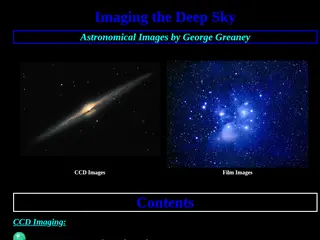
http://astroimages.com/
George Greaney's dedicated astrophotography site showcases deep sky astronomical images captured using both CCD and film techniques from his Ash Meadows Observatory in Nevada. Visitors can explore galleries of images taken with a Ritchey-Chretien 14.5-inch telescope, along with detailed sections on equipment, image processing software, and darkroom techniques for enhanced color astrophotography.
https://lostartoflogarithms.com/
Charles Petzold's web-book-in-progress explores the history, utility, and mechanics of logarithms, from their origins in 400-year-old mathematical tables to slide rules and spherical trigonometry. With over 30 chapter-length pages covering topics like the Book of Vlacq, log-log scales, and John Napier's life, this is a rich and deeply researched labor of love for math history enthusiasts.
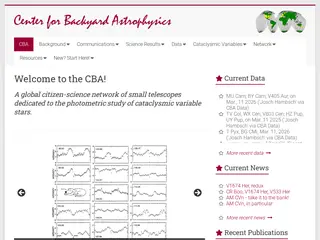
https://cbastro.org/
The Center for Backyard Astrophysics (CBA) is a global citizen-science network of amateur astronomers using small telescopes to conduct photometric studies of cataclysmic variable stars. The site hosts science results, publications, data submission guidelines, observer resources, and a worldwide station map connecting contributors from Belgium to Indiana.