
Science & Nature
1439 sites
Subcategories:
- Astronomy & Space (396)
- Chemistry (8)
- Earth Sciences (26)
- Biology (79)
- Physics (30)
- Mathematics (59)
- Weather & Climate (104)
- Amateur Radio (682)
- Electronics (47)
https://heavens-above.com/?Lat=35.60
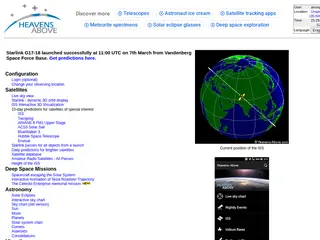
Heavens-Above, developed by Chris Peat, provides real-time satellite tracking and customized astronomical predictions based on your geographic location, including ISS passes, Starlink visibility, and deep space mission data. The site also offers interactive sky charts, solar eclipse information, comet and asteroid tracking, and a full satellite database spanning dozens of spacecraft.
https://grace.umd.edu/~tlaloc/archastro
The official web presence of the Center for Archaeoastronomy, a professional research organization founded at the University of Maryland in 1978, dedicated to the interdisciplinary study of astronomy in ancient and indigenous cultures. Visitors can explore peer-reviewed publications, newsletters, essays on ethnoastronomy, and learn about ISAAC, the international society promoting archaeoastronomy worldwide.
https://atmos.uw.edu/marka/wa.normals.html
Hosted on the University of Washington's atmospheric sciences domain, this page presents observed climate normals for Washington State covering the 1971-2000 period. Visitors can click on map markers to retrieve mean monthly precipitation, daily maximum temperature, and daily minimum temperature data for locations across the state.
https://ring.fediverse.radio/
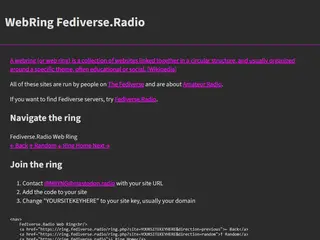
Fediverse.Radio WebRing connects 35 amateur radio enthusiast sites whose operators are active on the Fediverse, the decentralized social network. Run by M0YNG, a licensed radio amateur in Gloucestershire, the ring makes it easy to discover blogs, personal pages, and resources from ham radio operators around the world.
https://dxmaps.com/spots/mapg.php?Lan=E
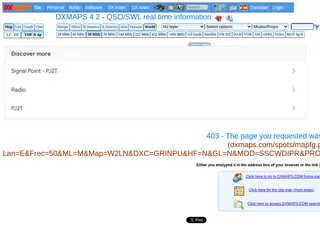
DXMAPS is a real-time interactive mapping tool for amateur radio operators, displaying live QSO contacts and SWL spots across multiple bands and propagation modes worldwide. Visitors can filter by frequency band, propagation type (Sporadic-E, Aurora, EME, Tropo, F2, and more), region, and data source including DX-Cluster and PSK Reporter, making it an invaluable tool for DXers and ham radio enthusiasts.
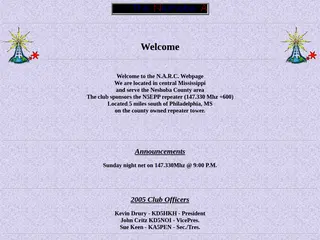
https://www.qsl.net/k/ka5rtf//narc
The Neshoba Amateur Radio Club (N.A.R.C.) serves ham radio operators in Neshoba County, central Mississippi, hosting a Sunday night net on the N5EPP repeater at 147.330 MHz. The site lists 2005 club officers, links to callsign lookup services like QRZ and Buckmaster, and connects visitors to local and regional radio nets.
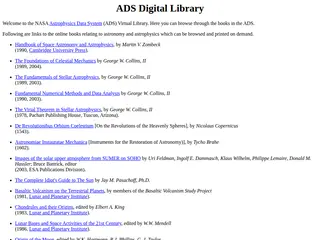
https://ads.harvard.edu/books
The NASA Astrophysics Data System (ADS) Virtual Library offers free online access to a curated collection of astronomy and astrophysics books, ranging from Copernicus's 1543 classic to modern astrophysics textbooks. Researchers and enthusiasts alike can browse and print foundational works on celestial mechanics, stellar astrophysics, lunar science, and solar physics from leading institutions like Harvard and the Lunar and Planetary Institute.
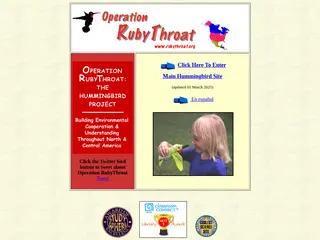
https://rubythroat.org/
Operation RubyThroat is a comprehensive hummingbird research and education project run by Bill Hilton Jr. and the Hilton Pond Center for Piedmont Natural History in South Carolina. The site covers everything from attracting hummingbirds with feeders to scientific banding studies and student citizen-science projects, making it a rich hub for both casual enthusiasts and educators.
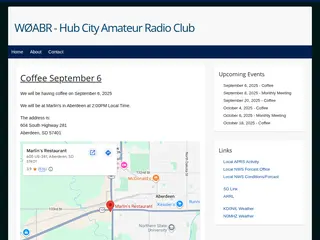
http://w0abr.com/
The Hub City Amateur Radio Club (W0ABR) serves the Aberdeen, South Dakota area with regular club meetings, nets, and informal coffee gatherings for ham radio enthusiasts. The site lists upcoming events, links to local APRS activity and weather resources, and connects members to the ARRL and regional repeater networks.
http://spider.seds.org/spider/Misc/naming.html
A detailed reference page from SEDS (Students for the Exploration and Development of Space) explaining how stars are named, from ancient cultural traditions to modern systematic schemes like the Bayer designation system introduced in 1603. Created by Hartmut Frommert and Christine Kronberg, the page covers Greek letter designations, star catalogs, IAU nomenclature standards, and debunks commercial 'name a star' schemes.