
Science & Nature
1439 sites
Subcategories:
- Astronomy & Space (396)
- Chemistry (8)
- Earth Sciences (26)
- Biology (79)
- Physics (30)
- Mathematics (59)
- Weather & Climate (104)
- Amateur Radio (682)
- Electronics (47)
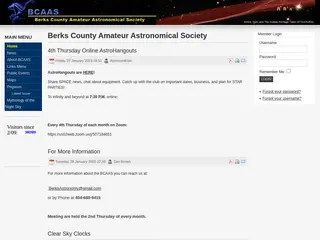
http://www.berksastronomy.org/
The Berks County Amateur Astronomical Society (BCAAS) is a Pennsylvania-based astronomy club hosting monthly meetings, star parties, and online AstroHangouts via Zoom for space enthusiasts. The site features clear sky clocks for local observing sites including Pulpit Rock Astronomical Park and Carpenter Observatory, plus a club newsletter called Pegasus.
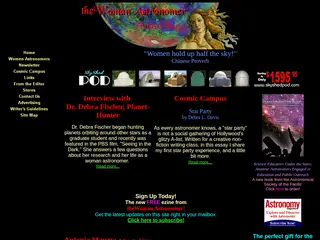
https://womanastronomer.com/
The Woman Astronomer is a dedicated resource celebrating women in astronomy, featuring interviews with professionals like planet-hunter Dr. Debra Fischer, historical profiles of pioneering figures like Antonia Maury, and student essays submitted through its Cosmic Campus section. Visitors can also find job listings for astronomers, a free ezine, and links to related resources, making it a rich hub for anyone interested in women's contributions to the field.
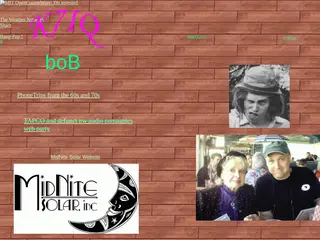
https://eskimo.com/~bgudgel
Bob Gudgel's personal homepage centers on his amateur radio identity as K7IQ, with links to the Puget Sound Repeater Group and interests in Pacific Northwest audio electronics history including TAPCO and other defunct companies. The page also touches on vintage telephone switching, solar energy, and local Seattle-area connections, making it a charming slice of old-web hobbyist culture.
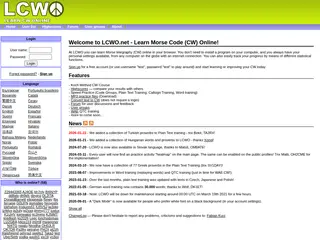
https://lcwo.net/
LCWO.net, created by Fabian Kurz (DJ5CW), is a comprehensive web-based platform for learning Morse code (CW) using the Koch method, with interactive exercises, progress tracking, and a global community of learners. The site features user highscores, forums, user groups, and multilingual support across dozens of languages, making it a go-to resource for ham radio operators worldwide.
http://faqs.org/faqs/space
The faqs.org Space Index is a comprehensive archive of Usenet FAQs dedicated to astronomy and space topics, covering everything from acronyms and data sources to how to become an astronaut and controversial space questions. Maintained across dozens of indexed documents, it serves as a structured reference hub for space enthusiasts and researchers seeking archived FAQ documents from the early internet era.
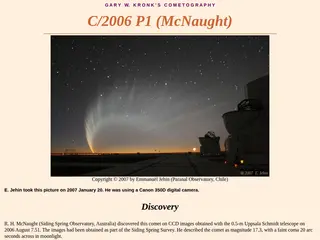
http://cometography.com/lcomets/2006p1.html
Gary W. Kronk's Cometography provides a detailed scientific profile of Comet C/2006 P1 (McNaught), covering its discovery, orbital calculations, and observer reports from around the world. The page includes historical highlights of the comet's brightness predictions, perihelion data, and observation logs with magnitudes and coma measurements, along with photographs taken at Paranal Observatory.
https://w4atc.ncsu.edu/
W4ATC is the Student Amateur Radio Society at NC State University, a club with over 90 years of history connecting students through the hobby of amateur radio. Visitors can explore the club's equipment archive, QSL information, moonbounce (EME) presentations, and details on joining the active campus radio community.
https://asteroidoccultation.com/
Steve Preston's long-running resource provides predictions for asteroid occultation events, listing when asteroids will pass in front of stars as seen from Earth. Covering upcoming events through 2026 with supplementary observation guides and FAQs, it serves as a reference for amateur and professional astronomers tracking these brief but scientifically valuable phenomena.
http://cactus-intertie.org/
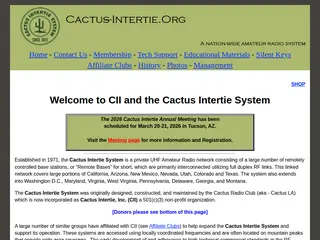
The Cactus Intertie System is a private UHF amateur radio network established in 1971, spanning large portions of the American Southwest and beyond through a web of remotely controlled base stations linked by full duplex RF. Run by Cactus Intertie, Inc., a 501(c)(3) nonprofit, the site covers membership, affiliate clubs, technical support, educational materials, and the network's extensive history across multiple states.
https://astronomy.ie/AIRS
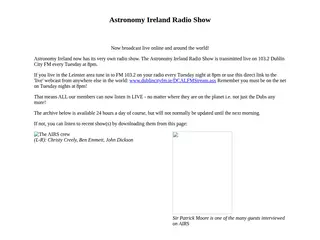
Astronomy Ireland Radio Show (AIRS) is the podcast and live broadcast archive for Ireland's dedicated astronomy radio program, transmitted every Tuesday on 103.2 Dublin City FM. Visitors can stream or download episodes featuring guests like Sir Patrick Moore, with archives spanning back through 2017 and a team including presenter Ben Emmett and sky notes by David Moore.