
Science & Nature
1439 sites
Subcategories:
- Astronomy & Space (396)
- Chemistry (8)
- Earth Sciences (26)
- Biology (79)
- Physics (30)
- Mathematics (59)
- Weather & Climate (104)
- Amateur Radio (682)
- Electronics (47)
https://qsl.net/tasma
The Two-Meter Spectrum Management Association (TASMA) is a group dedicated to managing and coordinating the two-meter amateur radio band. This page is a minimal redirect notice pointing visitors to the organization's new home at www.tasma.org.
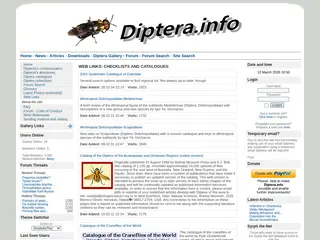
https://diptera.info/weblinks.php?cat_id=1
Diptera.info is a comprehensive portal dedicated to the insect order Diptera, covering flies, midges, and gnats with galleries, checklists, catalogues, and an active identification forum for researchers and enthusiasts worldwide. With over 5,000 members, a larva gallery, downloadable articles, and curated web links to scientific collections and catalogues, it serves as a serious reference hub for dipterists at all levels.
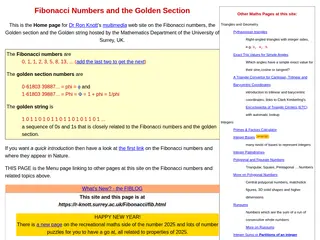
https://r-knott.surrey.ac.uk/Fibonacci/fib.html
Dr Ron Knott's comprehensive mathematics resource, hosted by Surrey University since 1996, covers Fibonacci numbers, the golden ratio, and their appearances in nature, art, geometry, architecture, and music. Packed with interactive calculators, puzzles, investigations, and dozens of linked pages exploring everything from Lucas sequences to phyllotaxis, this is one of the oldest and most thorough maths sites on the web.
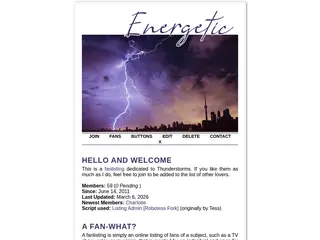
https://thunder.fanfreak.net/
A fanlisting dedicated to thunderstorms, inviting fans from around the world to add their name to a growing list of fellow storm enthusiasts. With 59 members and running since 2011, it is part of the TheFanlistings.org network and uses the Listing Admin Robotess Fork script.
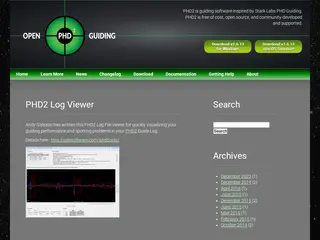
https://openphdguiding.org/phd2-log-viewer
PHD2 Guiding is the home of PHD2, a free and open-source autoguiding software used by astrophotographers to keep telescopes precisely locked on celestial targets. This page highlights a log file viewer tool developed by Andy Galasso, which helps users visualize guiding performance and diagnose tracking issues from their PHD2 guide logs.
https://starinabox.net/
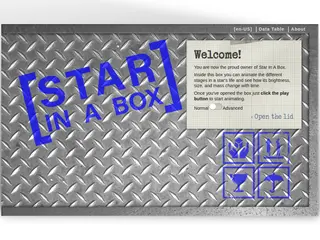
Star in a Box is an interactive educational tool from Las Cumbres Observatory that lets you animate and explore the full lifecycle of stars across a range of solar masses using the famous Hertzsprung-Russell diagram. Visitors can watch how a star's brightness, size, surface temperature, and mass evolve over billions of years, with downloadable data tables for independent investigation.
https://pages.astro.umd.edu/~mcmiller/nstar.html
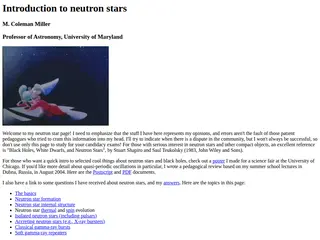
Professor M. Coleman Miller of the University of Maryland shares an in-depth educational resource on neutron stars, covering topics from formation and internal structure to pulsars, X-ray bursters, and gamma-ray bursts. The page blends academic rigor with accessible writing, including links to pedagogical reviews, Q&A sections, and visual aids that make complex astrophysics approachable.
https://qsl.net/n9zia/wireless/laser/index.html
A hobbyist technical resource covering amateur laser and lightwave communications, including an experimental RS-232 laser transceiver, a 44 km laser link project, and a laser bounce listening device. The site documents hands-on DIY optical communication experiments that push the boundaries of what amateur radio enthusiasts can build on a budget.

https://farcircuits.net/
Far Circuits is a long-running manufacturer and supplier of printed circuit boards designed specifically for amateur radio and electronics hobbyist projects, operating out of Dundee, Illinois for over 35 years. Visitors can browse and order boards organized by category including audio amps, frequency standards, converters, keyers, battery chargers, and direction-finding projects, with ordering handled through PayPal.
https://www.qsl.net/g7txq
The homepage for the Association of Norfolk RAYNET Groups, a UK-based amateur radio emergency communications network serving Norfolk. The site provides information about who they are, links to individual group websites, and resources pointing to other amateur radio sites.